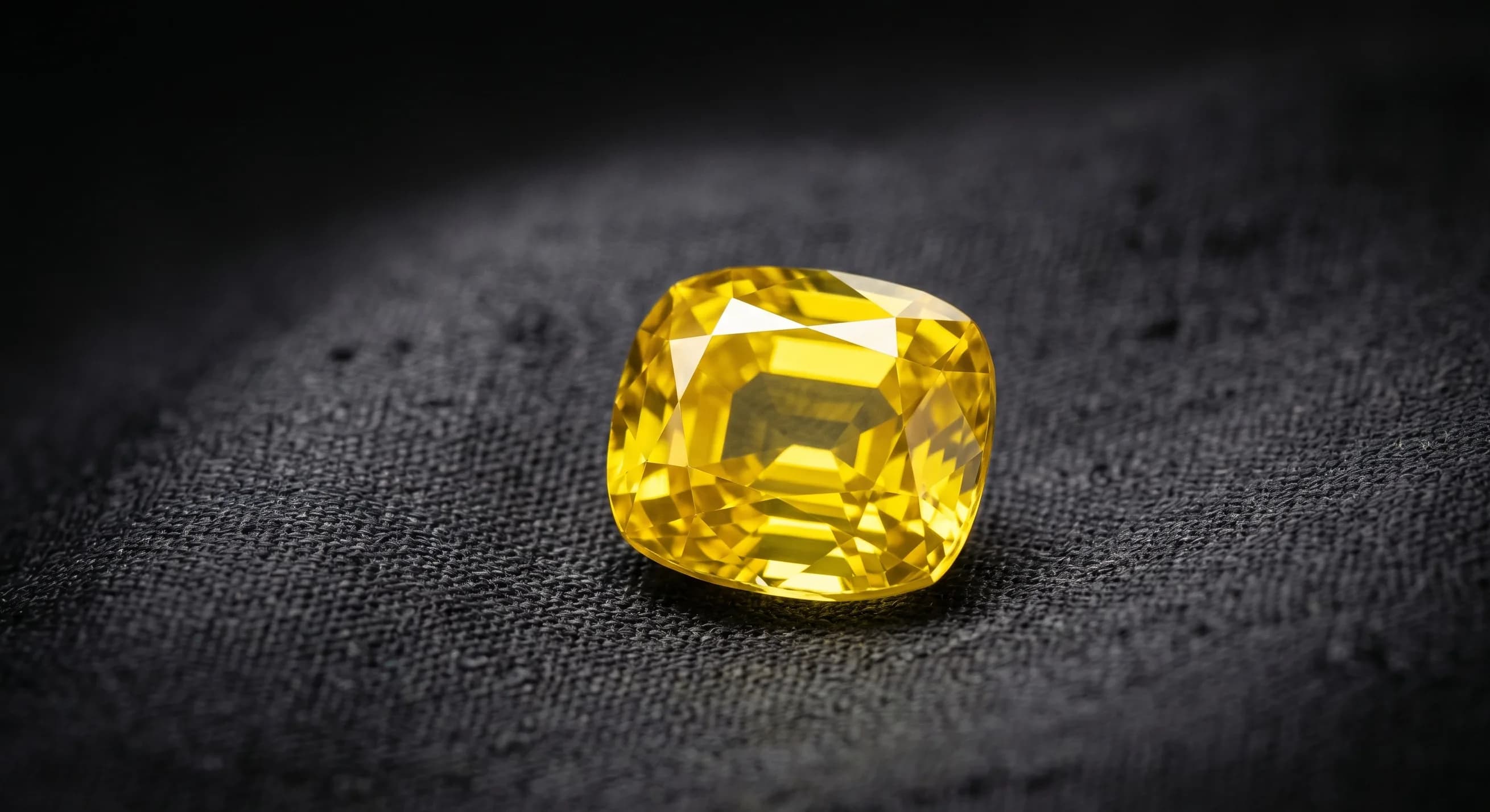
A yellow Ceylon sapphire is a corundum gem in shades from light butter to deep canary, mined predominantly in Sri Lanka's Ratnapura and Elahera districts. In Vedic astrology it is the pukhraj stone, the gem of Jupiter, worn for prosperity, wisdom, and matrimonial blessings. Commercially it is one of the most desirable yellow gemstones because Sri Lankan rough runs cleaner than yellow sapphire from any other source, more frequently retains saturated colour without heat treatment, and prices below blue Ceylon at every weight. That last point makes yellow Ceylon sapphire the best value play in the entire Ceylon sapphire family: a 3-carat unheated yellow with a major lab report can cost less than a 1.5-carat blue of equivalent quality.
This guide covers what the stone is, what the yellow sapphire meaning carries in different traditions, what it actually costs in 2026, and how to choose one whether you are buying for a ring or for astrological wear.
What Is a Yellow Ceylon Sapphire?
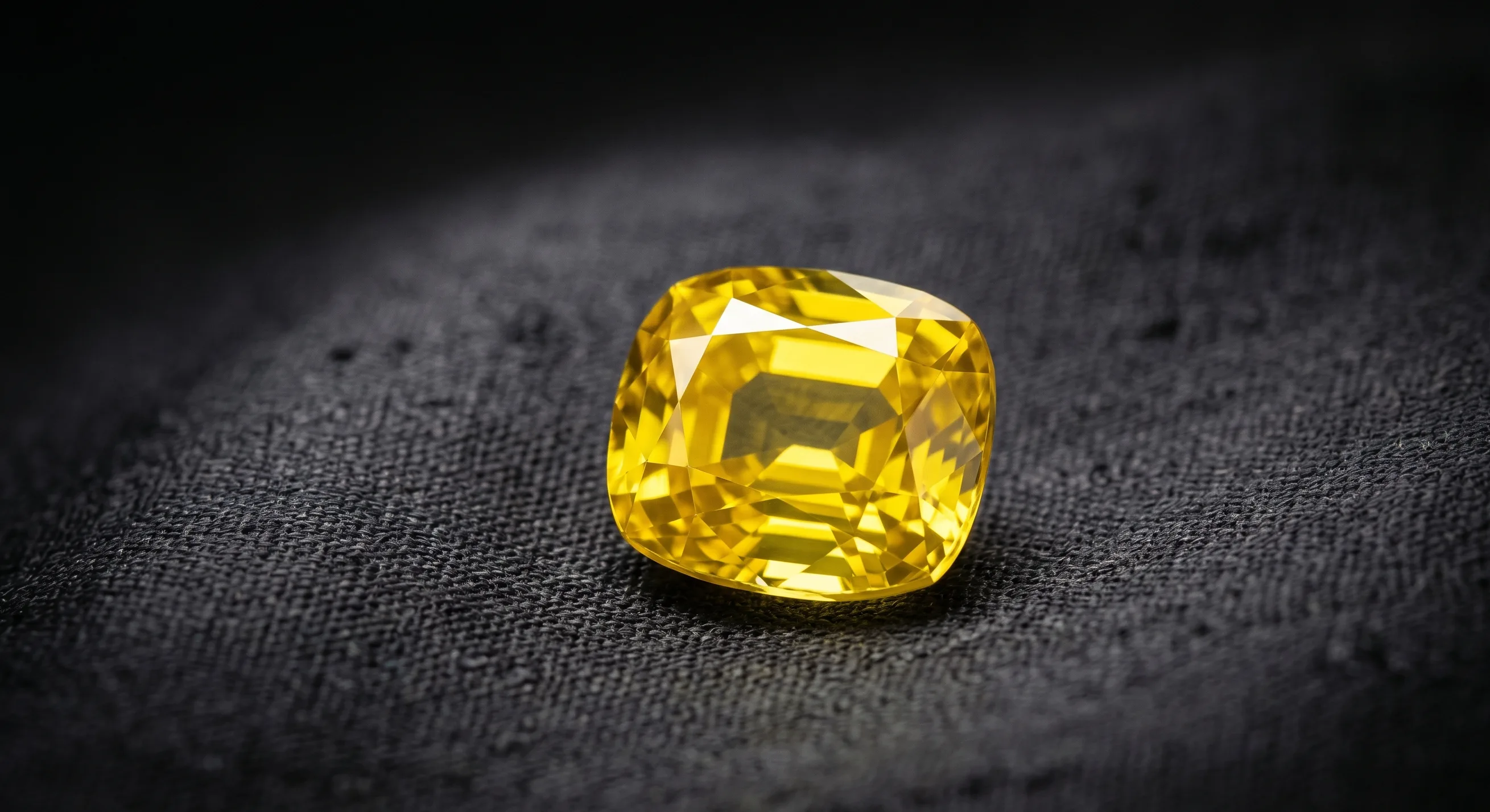
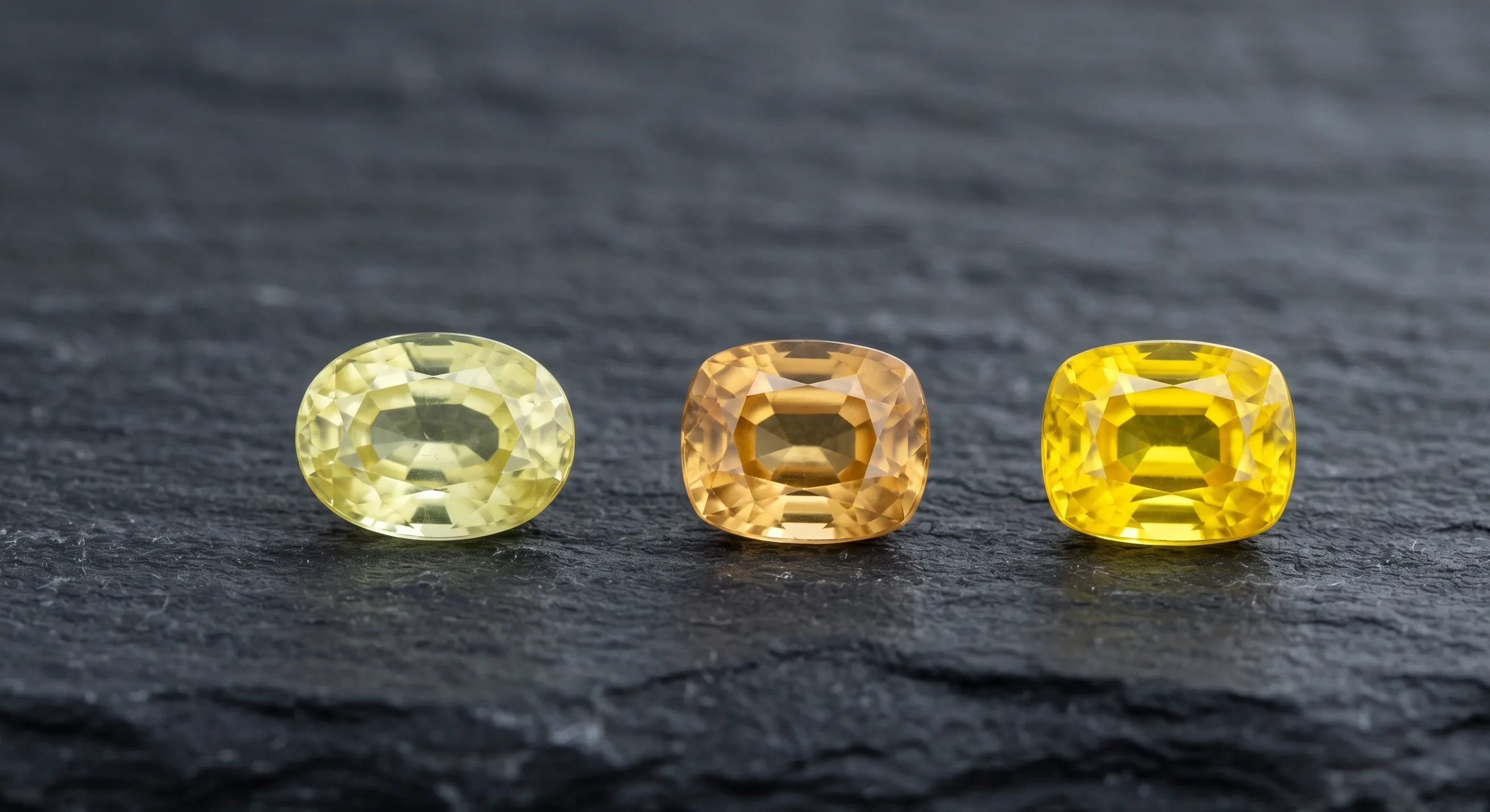
Yellow sapphire is the yellow colour variety of corundum, the same mineral species as ruby and blue sapphire. The yellow is caused by trace amounts of iron in the crystal lattice, sometimes with a contribution from chromium that pushes the colour toward orange. Sri Lanka produces yellow sapphire across the full range:
- Light yellow / lemon. Pale, slightly cool yellow with low saturation. Often used for fashion jewellery at lower price points.
- Golden yellow. Warmer, higher saturation, with a touch of orange or honey. The most common commercial grade.
- Canary yellow. Vivid, pure, intensely saturated yellow with no brown or olive tones. The most prized colour and the source of significant price premiums.
- Yellow with secondary green or brown. Lower-grade material; the green or brown casts read as muddy face-up.
The geology is the same as for blue Ceylon: alluvial gravel deposits in the southwestern part of the island, washed out of high-grade metamorphic rocks by millions of years of erosion. Yellow rough is found in the same pits as blue rough, often in the same wash. Most of the world's fine yellow sapphire originates within fifty kilometres of Ratnapura.
What Is the Meaning of a Yellow Sapphire (Pukhraj Stone)?
In Vedic astrology, yellow sapphire is the gemstone of the planet Jupiter (called Brihaspati or Guru in Sanskrit), the planet of wisdom, prosperity, education, and marriage. The pukhraj stone is one of the nine principal gems of the Navaratna and is considered the most auspicious of all gems for those whose Jupiter is well-placed in their birth chart, or weak and in need of strengthening.
The yellow sapphire meaning across traditions is unusually consistent: prosperity, learning, legitimate authority, fertility (particularly in the context of marriage), and protection from misfortune in financial affairs. In Indian tradition specifically, pukhraj is associated with finding a husband or wife and is often gifted to women approaching marriageable age or worn after marriage to bless the union. Buddhist and Sinhalese traditions in Sri Lanka itself overlap with the Hindu Jyotish tradition: yellow sapphire is regarded as a stone of prosperity and learning, often worn by clergy and scholars.
For astrological wear, the requirements are stricter than for ornamental jewellery: natural and untreated (lab-confirmed "no indications of heating" is essentially mandatory), eye-clean, saturated colour with no muddy undertones, worn on the index finger of the right hand in a yellow gold setting, traditionally first put on during the Shukla Paksha (waxing moon) on a Thursday. Communicate the astrological purpose to the dealer up front: the selection criteria are different from ornamental criteria.
How Much Does a Yellow Ceylon Sapphire Cost?
Yellow Ceylon sapphire is genuinely good value at every weight class. Roughly, in 2026, expect:
| Carat weight | Heated, good colour | Unheated, good colour | Unheated canary |
|---|
| Under 1 ct | USD 250–500/ct | USD 400–800/ct | USD 700–1,200/ct |
| 1 to 2 ct | USD 400–900/ct | USD 700–1,500/ct | USD 1,200–2,500/ct |
| 2 to 4 ct | USD 700–1,800/ct | USD 1,200–3,000/ct | USD 2,500–5,000/ct |
| 4 to 6 ct | USD 1,500–3,500/ct | USD 2,500–6,000/ct | USD 5,000–10,000/ct |
| 6 ct + | Steep premiums; auction territory above 8 ct unheated canary | | |
These are dealer-to-end-buyer ranges, not wholesale or auction prices. Retail markup at high-street jewellers can add 50–200%.
Two things move price more than anything else:
Heat treatment status. Unheated yellow Ceylon sapphire is roughly 50–150% more expensive than equivalent heated material. The premium is partly driven by Vedic astrological demand and partly by the rarity of strongly coloured yellow rough that does not need heat. For a full breakdown of how treatment shifts pricing across the Ceylon family, see the Ceylon sapphire price per carat guide.
Colour saturation. The jump from "good golden yellow" to "canary yellow" is the single largest within-quality price step, often 40–80%. The next step up, large unheated vivid canary above 5 carats, is into rare-stone territory and prices accordingly.
Compared to blue Ceylon sapphire, yellow runs 30–50% cheaper at equivalent quality. Compared to padparadscha (the rarest sapphire colour from Sri Lanka), yellow runs 70–90% cheaper. For a buyer who wants real Sri Lankan corundum with a major lab report at a manageable budget, yellow is consistently the best entry point.
What Is the Difference Between a Canary Sapphire and a Standard Yellow?
Canary sapphire is the trade term for the most intensely saturated pure yellow grade. On a GIA or SSEF report it grades "vivid yellow" with no brown or olive modifiers, and the face-up colour reads as a clean, almost electric pure yellow (the way a canary bird's feathers read in daylight, hence the name).
The distinction matters for two reasons. Canary commands the price premium described above, so getting the term in writing on an invoice or a lab report is worth doing. And canary saturation almost never occurs in heated material from secondary sources: the very best canary yellow is almost always unheated Sri Lankan, so buying canary effectively also means buying unheated origin documentation. The terms travel together.
Are Yellow Ceylon Sapphires Heat Treated?
Most are. Yellow corundum from Sri Lanka often comes out of the ground in a slightly milky, pale, or "geuda"-like state that responds dramatically to heat, with the colour intensifying and the crystal clearing. Routine heat treatment of yellow rough is industry standard and is not a defect or fraud, provided it is disclosed. A heated yellow Ceylon sapphire with full lab disclosure is a perfectly legitimate gem at the lower price point.
Where it matters:
- Astrological / pukhraj use requires unheated material, full stop.
- Investment-grade collecting strongly prefers unheated, particularly in canary saturation.
- Engagement rings and high-end ornamental wear are buyer preference; both heated and unheated are acceptable.
The verification mechanism is the same as for blue sapphire: a report from GIA, SSEF, or Gübelin will state explicitly whether there are indications of heating. The phrase to look for is "no indications of heating" in the comments field. Nothing else is sufficient. A dealer's verbal assurance, a small in-house "lab" report, or vague language ("untreated origin") does not substitute. For more on what these reports actually say, the GIA sapphire certificate guide walks through the layout.
How to Choose a Yellow Sapphire for a Ring (or for Astrological Use)
The decision tree splits cleanly.
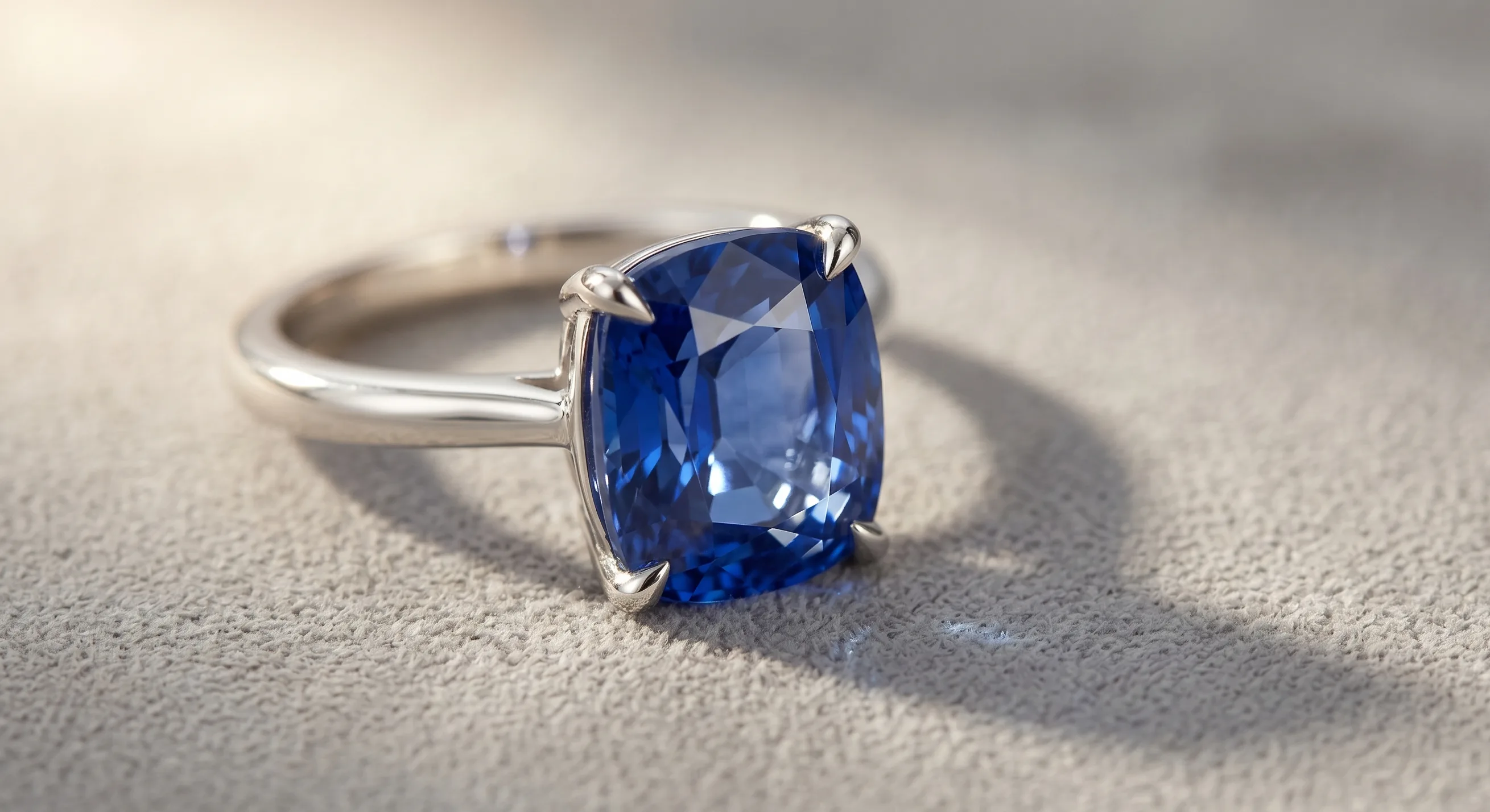
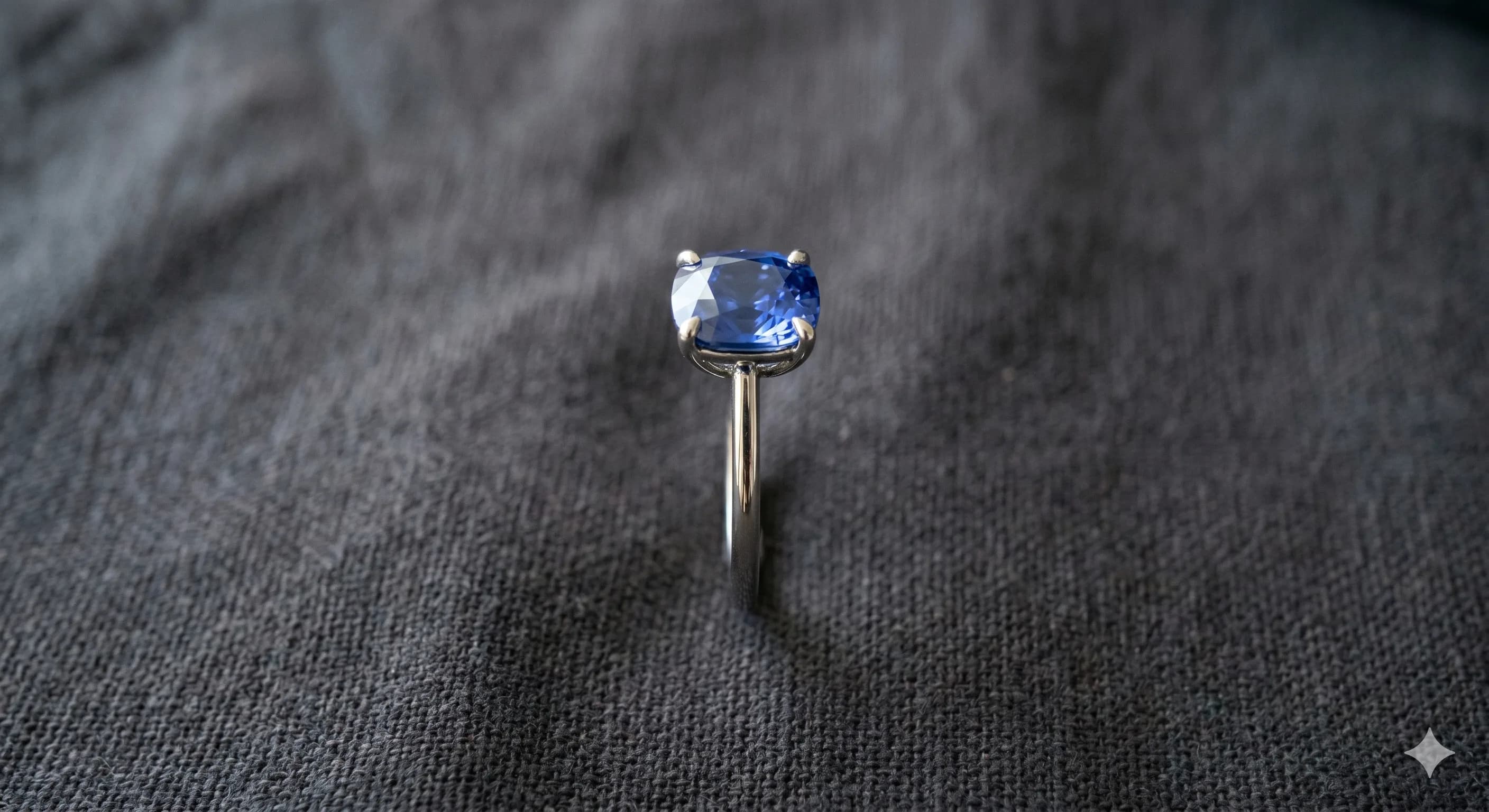
For ornamental wear (rings, pendants, earrings), the priorities are face-up colour, eye-cleanliness, and cut quality. Heated material is fine. Aim for at least 1.5 carats for a centre stone in a standard solitaire. Yellow gold settings flatter the stone and pull the colour warmer; white metals make the yellow read cleaner and cooler. Mohs hardness 9 makes yellow Ceylon fully suitable for daily wear and engagement-ring use.
For pukhraj / astrological use, the priorities are stricter: unheated (lab-confirmed), eye-clean, strongly saturated yellow with no green or brown undertones, set in yellow gold for the index finger, minimum 2 carats and more typically 3 to 5 carats.
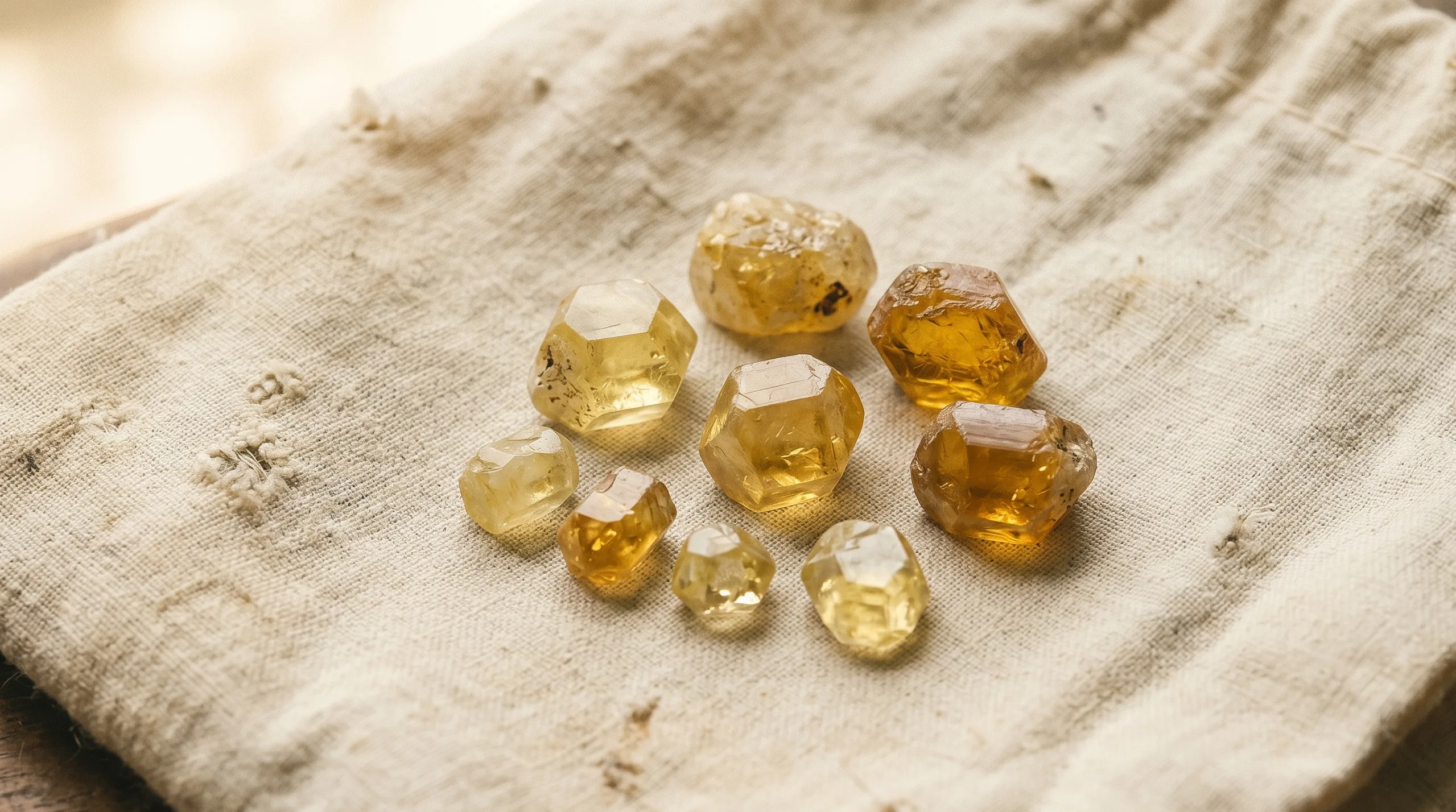
I once helped a client in Mumbai source a 4.12-carat unheated cushion canary for pukhraj wear after his astrologer advised him to strengthen his Jupiter for an arranged marriage. The stone we ended up with came out of a cloth wrap on a Ratnapura dealer's lap, taken to the open window, and the moment the canary saturation caught daylight the conversation effectively ended. SSEF report confirmed unheated, Sri Lanka, vivid yellow. It was set in a 22-karat yellow gold ring in Mumbai three weeks later.
For comparison with the rarest of all Sri Lankan corundum colours, the padparadscha sapphire guide covers the closest cousin to yellow Ceylon: a pinkish-orange that overlaps the upper end of the yellow spectrum and trades at very different multiples.
Where to Buy a Yellow Ceylon Sapphire
The honest checklist:
- Lab report from a major laboratory (GIA, SSEF, Gübelin, or AGL) confirming species, Sri Lankan origin, and treatment. For pukhraj use, "no indications of heating" must appear.
- A photograph of the stone in daylight, not only under jeweller lighting. Yellow shifts more across light sources than blue does.
- Treatment disclosed explicitly on the invoice, "heated" or "unheated" stated, not implied.
- A real return window. Yellow benefits from being seen in person before final acceptance.
If you want a yellow Ceylon sapphire sourced this way, with a major lab report and direct provenance from a named Ratnapura dealer, tell us your specifications (carat range, colour preference, heated or unheated, budget) and we will source it for you. Yellow Ceylon is the colour we recommend most often to first-time Ceylon buyers; the value relative to blue is currently the best it has been in five years.