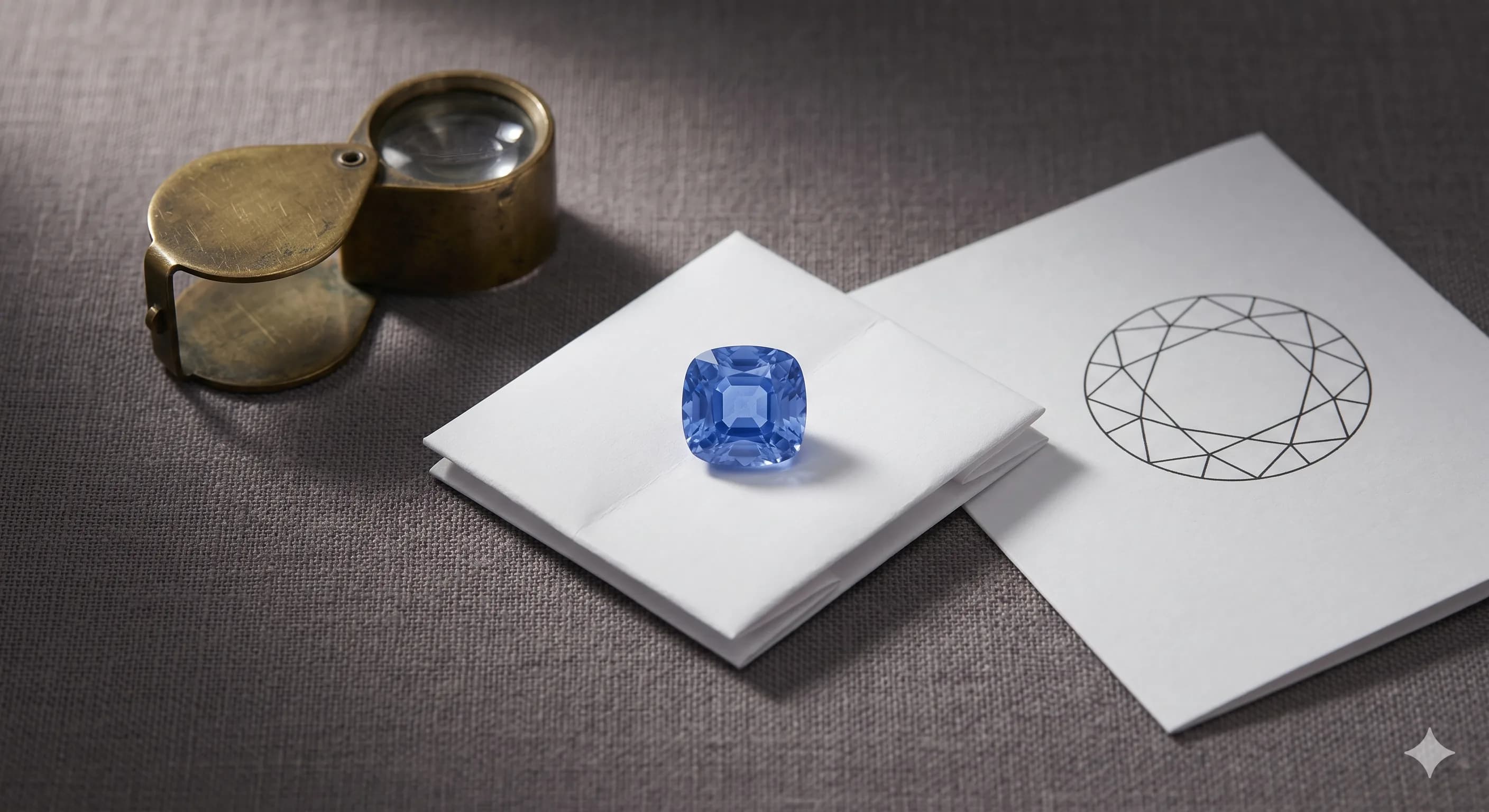
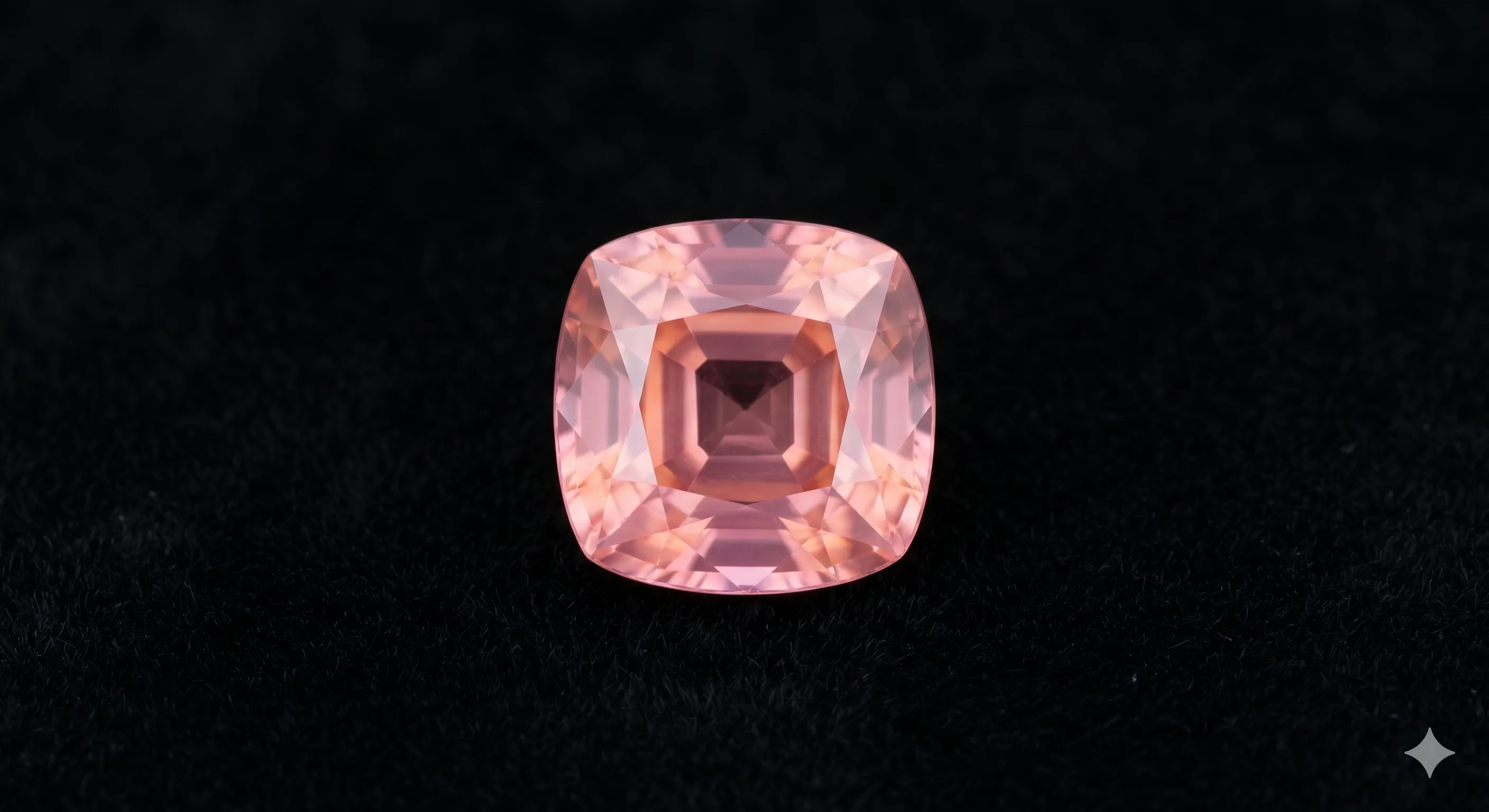
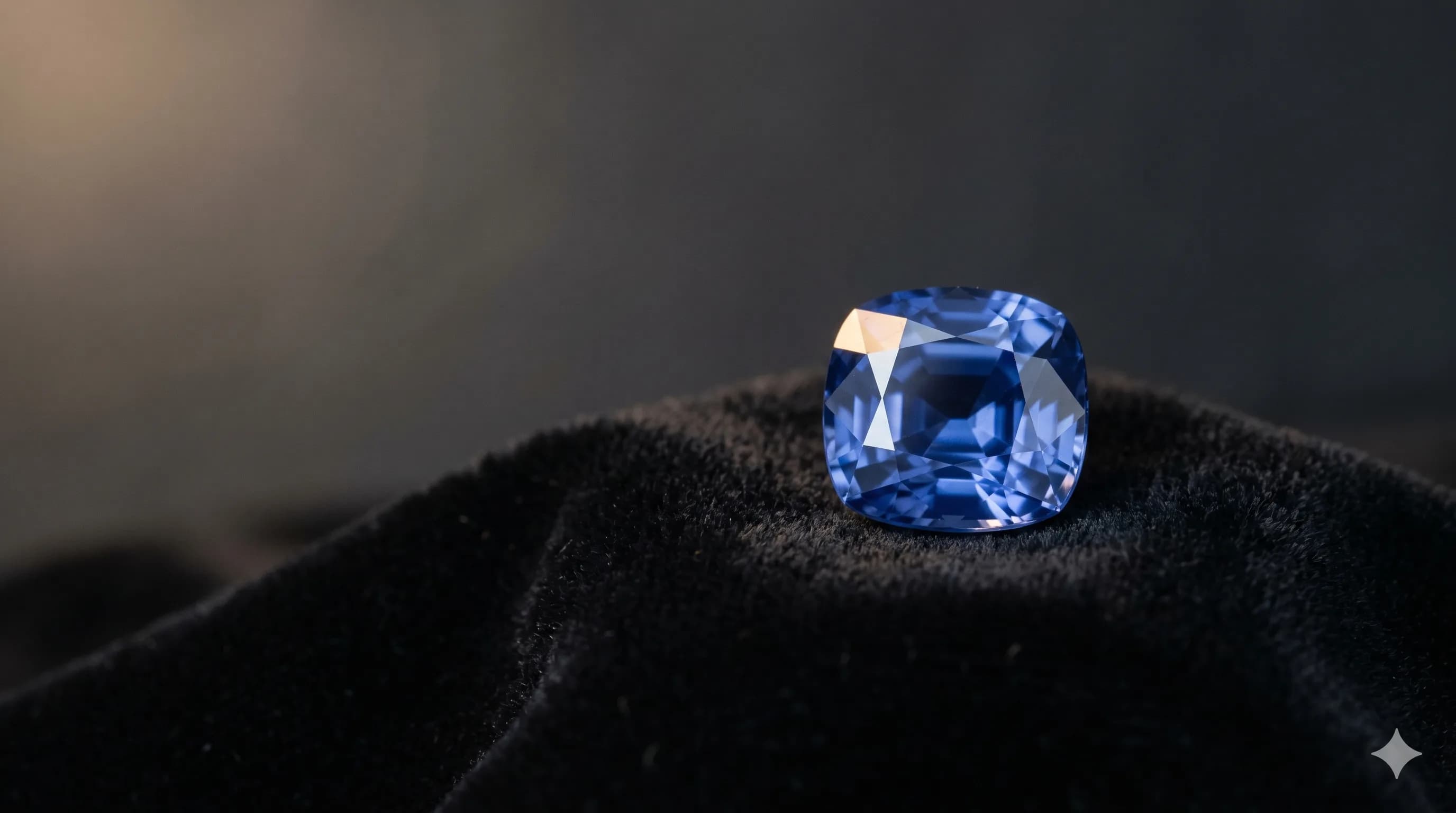
Ceylon sapphire prices in 2026 range from roughly $300 per carat for commercial-grade heated material up to $20,000 or more per carat for fine unheated stones with premium laboratory reports. Most ethically sourced, certified Ceylon sapphires between one and three carats fall between $1,500 and $6,000 per carat. The price is driven by four factors in descending order of impact: color, treatment status, size, and certification. This guide walks through realistic price ranges by carat weight, explains why two stones that look identical in a photograph can differ in price by a factor of five, and shows what to watch for when a quoted price looks too good to be true.
What Drives the Price of a Ceylon Sapphire?
Before any sapphire price guide is useful, you need to understand what moves the number. In order of impact:
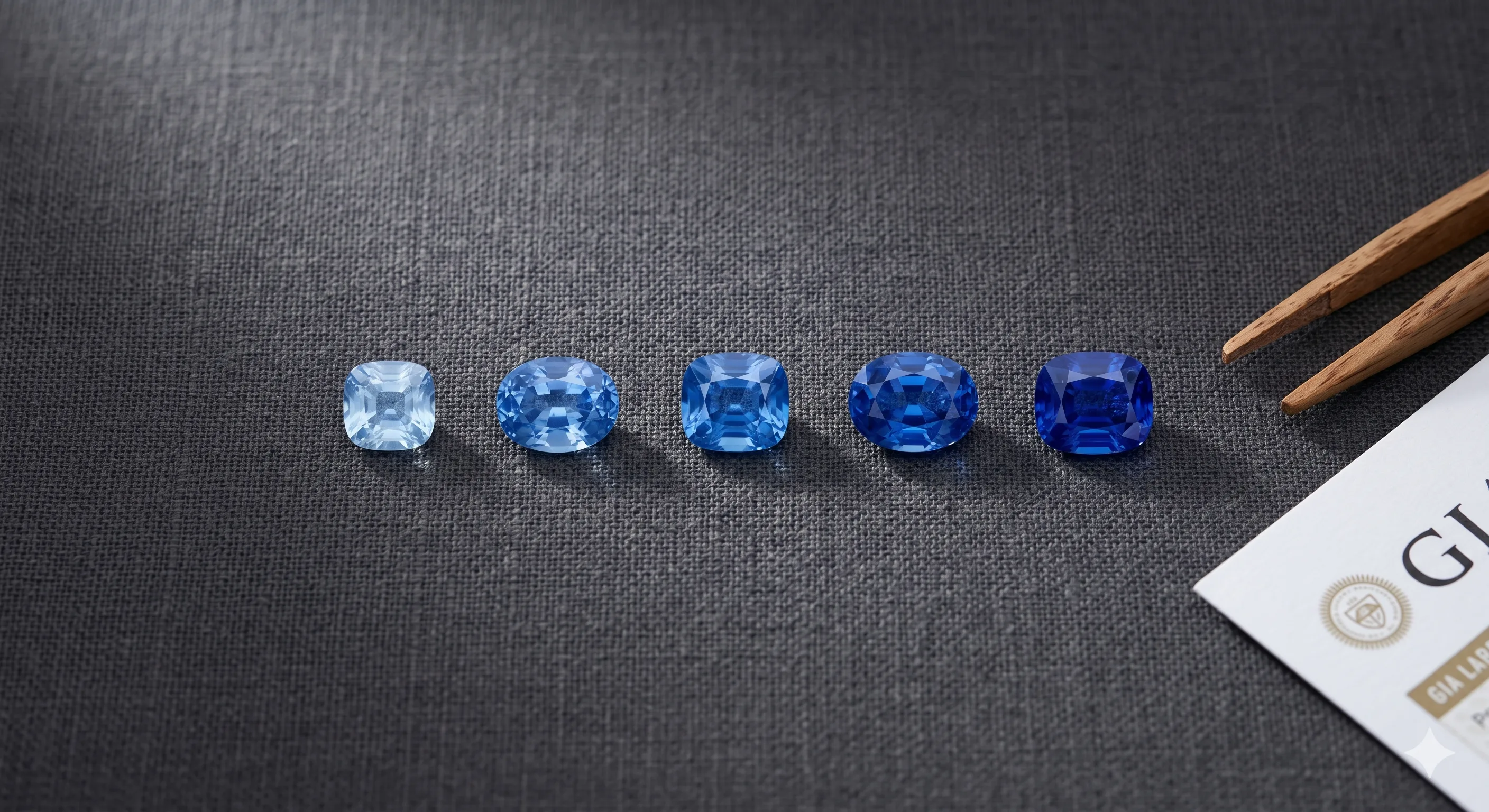
Color is the single largest price driver, accounting for roughly 50 to 60 percent of a stone's value. Ceylon sapphires are famous for a specific medium-light blue called "cornflower," and for the deeper "royal blue" typically associated with Burmese stones but found in top Ceylon material as well. Stones that sit in either of those color zones command a significant premium. Stones that are too dark (often described as "inky" or "ink blue") or too pale lose value quickly. Color saturation, hue, and tone are all weighted by labs and dealers.
Treatment status is the second largest driver. A heated sapphire is a genuine sapphire, just one whose color has been improved by controlled exposure to high temperatures in a furnace. An unheated stone has never been treated. Lab reports distinguish the two, and unheated stones command a premium of roughly two to five times the price of an equivalent heated stone. We cover the mechanics and market implications in our guide to unheated versus heat-treated sapphires.
Size (carat weight) matters, but not linearly. Prices per carat increase as stones get larger, with sharp jumps at the one-, two-, three-, and five-carat thresholds.
Certification adds a measurable premium, usually five to twenty percent over an uncertified equivalent. The premium is higher for origin-specific reports from SSEF or Gübelin than for identification-only reports from GIA.
Cut quality, clarity, and shape matter at the margins but are usually smaller factors than the four above. Sri Lankan cutters tend to prioritize retaining carat weight over ideal proportions, which is why a traditional Ceylon cushion may look slightly deep or slightly windowed compared to modern Western cuts. This is a cultural and economic choice by cutters, not poor workmanship.
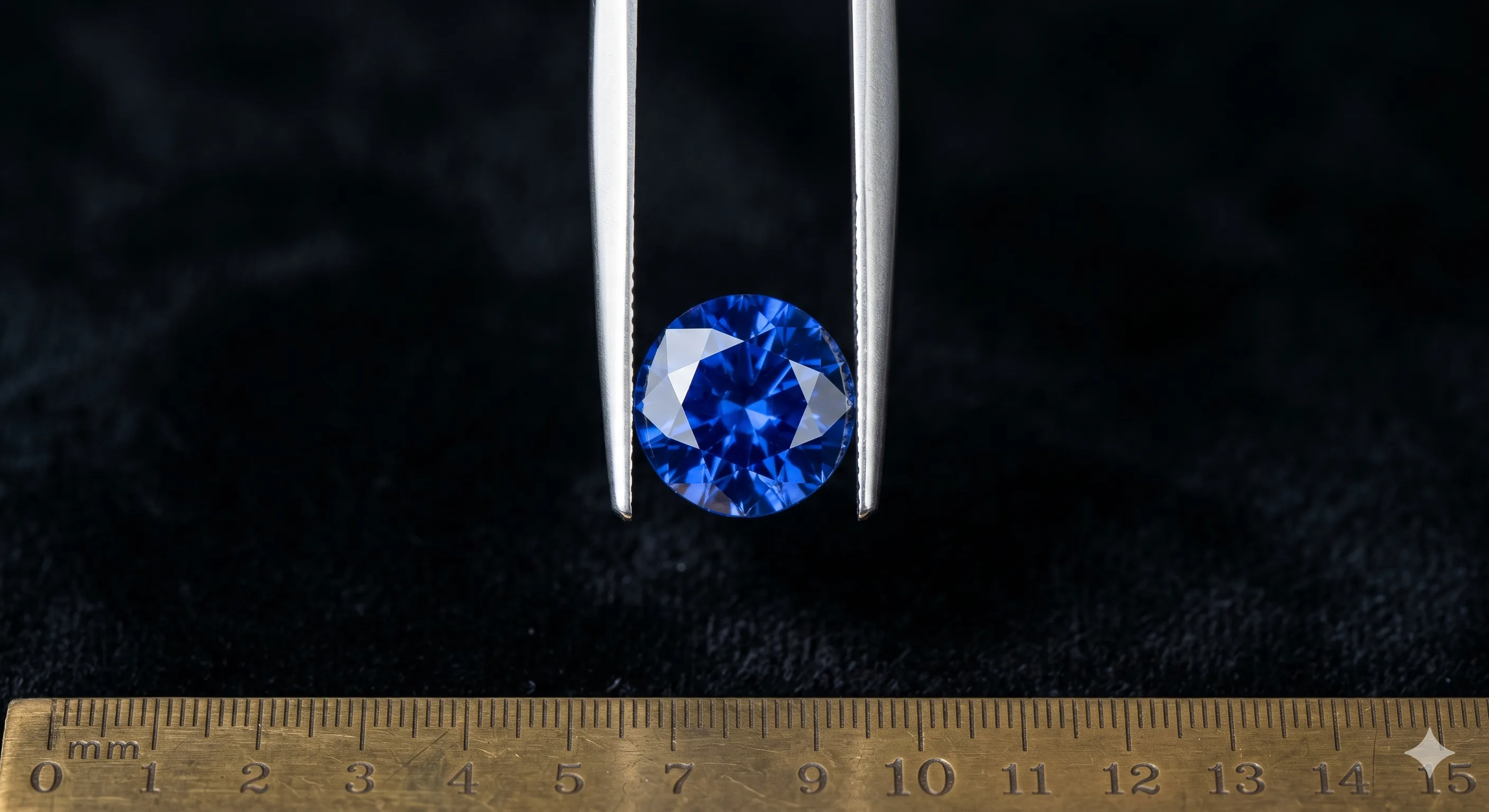
Ceylon Sapphire Price Per Carat by Size in 2026
If you are asking "how much does a Ceylon sapphire cost," the honest answer depends almost entirely on size band. Below is the range we see in 2026 across our own sourcing network and at comparable dealers working directly with Sri Lankan material.
Before reading the table, a quick definition of the four quality tiers:
- Commercial heated. Heated Ceylon sapphires with acceptable but not premium color (often slightly too dark, too pale, or slightly greyish), visible inclusions, and basic GIA identification-only certification. Most stones sold into mid-market jewelry fall here.
- Fine heated. Heated stones with strong cornflower or royal blue color, eye-clean to very lightly included, well-proportioned cuts, and full lab reports including origin. The heat treatment is the only thing separating these from the unheated tier.
- Fine unheated. Same color, clarity, and cut standard as "fine heated," but with a major laboratory report (GIA, SSEF, Gübelin, or Lotus Gemology) confirming no indications of heating. The untreated status is what drives the multiple.
- Exceptional unheated. Top of the market. Ideal color saturation and hue (classic cornflower or vivid royal blue with no brown, grey, or green modifier), eye-clean, well-cut, and certified by SSEF or Gübelin with a confirmed Ceylon origin. These are the stones that end up at Christie's and Sotheby's or in private collections.
| Size | Commercial heated | Fine heated | Fine unheated | Exceptional unheated |
|---|
| Under 1 ct | $300 to $800 | $800 to $2,000 | $2,000 to $4,500 | $4,500 to $8,000 |
| 1 to 3 ct | $500 to $2,500 | $3,000 to $8,000 | $7,000 to $18,000 | $10,000 to $20,000 |
| 3 to 5 ct | $1,200 to $4,000 | $4,000 to $8,000 | $8,000 to $18,000 | $18,000 to $35,000 |
| 5 to 10 ct | $2,500 to $6,000 | $8,000 to $20,000 | $18,000 to $40,000 | $30,000 to $60,000+ |
| 10 ct and up | $4,000 to $10,000 | $10,000 to $25,000 | $30,000 to $70,000 | $60,000 to $150,000+ |
All prices shown are per carat, not total price per stone. Multiply by the stone's carat weight for the approximate full price.
These ranges assume GIA, SSEF, Gübelin, or Lotus Gemology certification. Uncertified stones typically trade at a ten to twenty percent discount, not because they are lesser stones but because the buyer is absorbing the risk of unverified origin and treatment.
A note on uncertified "unheated" stones. In Sri Lanka's domestic market, particularly around Ratnapura and Colombo, you will encounter a category that sits between the first two columns above: commercial-grade unheated stones without a major laboratory report. These are typically small or included pieces where the cost of a GIA or SSEF certificate would exceed the stone's margin, so the dealer lists it uncertified. Locally, these trade at roughly 1.5× the price of a commercial heated equivalent. The caveat is real: without a report confirming "no indications of heating," the unheated claim rests entirely on the dealer's word. We do not list stones in this tier through Crestonne for that reason. If the untreated status matters to you, insist on at least an identification-level report from GIA, SSEF, Gübelin, AIGS, or Lotus Gemology before closing.
Under 1 Carat
Below one carat, Ceylon sapphire prices are relatively forgiving. Rough material in this size band is abundant, and most stones are heated for commercial use in melee settings, halo rings, and accent work. A cornflower or royal blue 0.7-carat heated Ceylon sapphire with a GIA report should cost between $600 and $1,500 total. Unheated stones in this size are harder to justify economically unless you are matching an existing suite or building a collection.
1 to 3 Carats
This is the most commercially active size band and the one most buyers ask about. A one-carat heated Ceylon sapphire of good color with a GIA report typically costs $1,500 to $5,000 total. A two-carat stone of the same quality roughly doubles that, not because the stone is twice as good but because two-carat Ceylon material is meaningfully scarcer than one-carat material. A three-carat heated stone of fine color usually sits between $12,000 and $25,000 total.
Unheated stones in this band command the premium described earlier. A 2.5-carat unheated royal blue Ceylon sapphire with an SSEF report identifying Ceylon origin can realistically cost $15,000 to $30,000 total in 2026, and top examples exceed that. For engagement ring buyers, this is the band where most decisions get made, and we cover the full tradeoff between size, color, and setting in our blue sapphire engagement ring buying guide.
3 to 5 Carats
Above three carats, Ceylon sapphire supply begins to thin noticeably. Miners in Ratnapura and Elahera see stones this size less often, and clean, well-colored rough is uncommon. Prices reflect this. A 4-carat heated royal blue Ceylon sapphire with a clean GIA report sits around $25,000 to $40,000 total. An unheated equivalent with SSEF or Gübelin certification typically runs $50,000 to $100,000.
5 Carats and Above
This is where Ceylon sapphire pricing begins to track with the auction market rather than the trade retail market. Fine unheated stones over five carats are rare enough that each one is priced individually, based on color, clarity, and the specific lab report. A 7-carat unheated cornflower blue Ceylon with a Gübelin origin report can command $200,000 to $400,000 total. Stones above ten carats with similar provenance routinely pass the one-million-dollar mark at Christie's and Sotheby's.
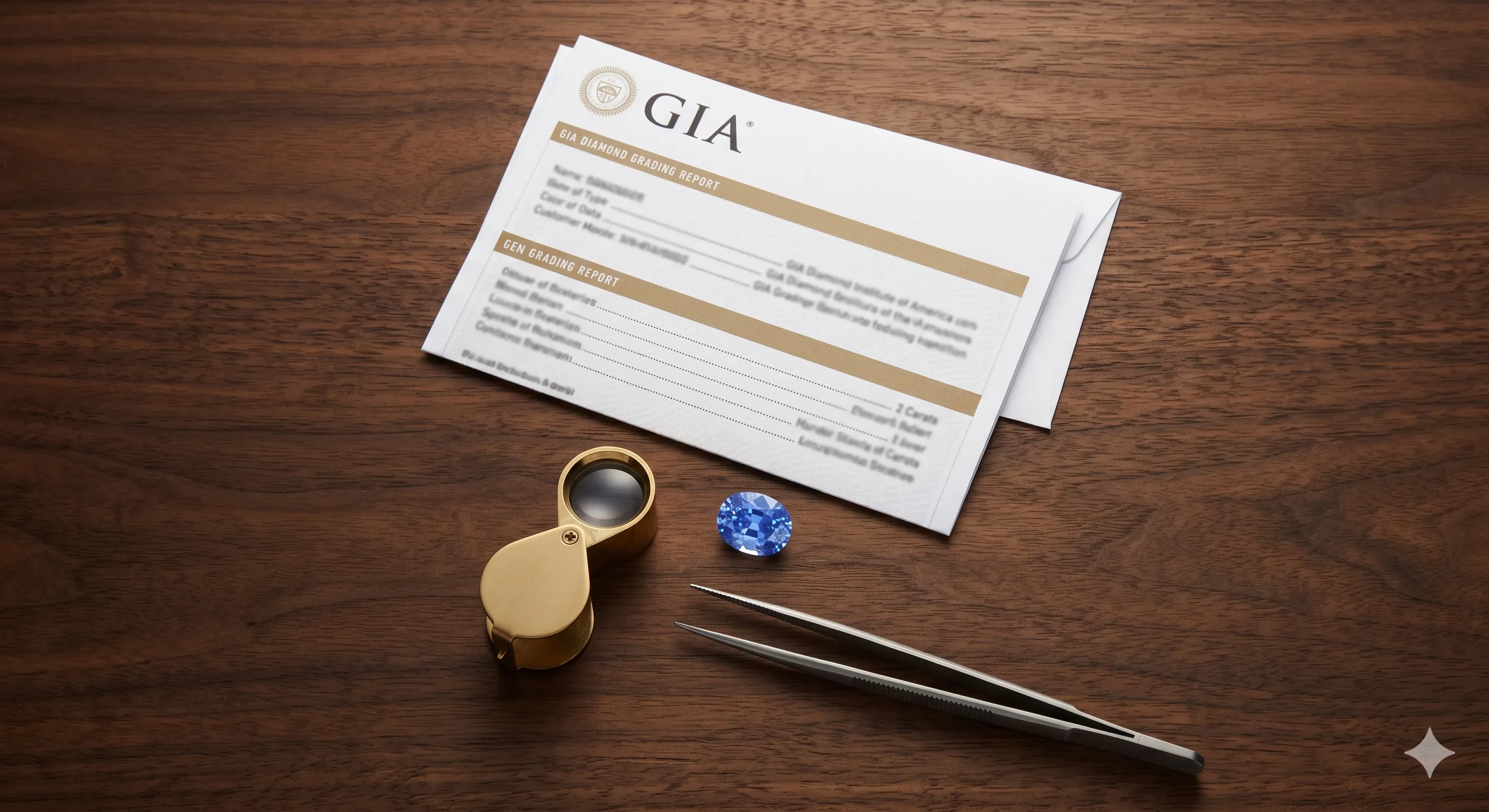
The Unheated Premium: Why Untreated Stones Cost 2 to 5× More
The single most common question buyers ask about sapphire value is why unheated stones cost so much more than heated stones that look the same in a photograph.
The answer is scarcity, not beauty. Heat treatment can take a cloudy or pale piece of Sri Lankan corundum (called "geuda" locally) and transform it into a vibrant blue sapphire. Roughly 95 percent of Ceylon sapphires on the market have been heated at some point between the mine and the retail counter. An unheated stone of fine color is genuinely rare: the earth produced the color without intervention. A lab report confirming "no indications of heating" is documentation that you are buying a stone from the five percent tier.
The premium compounds with size. At one carat, an unheated royal blue Ceylon might cost two times its heated equivalent. At three carats, the same stone might cost three times more. At five carats, four to five times. The reason is that unheated rough large enough to cut a clean stone in these sizes is exponentially rarer than smaller unheated rough.
This is why we always recommend buyers treat the unheated decision as a separate question from the color decision. A beautifully heated Ceylon sapphire with a GIA report is a legitimate, certified, natural stone. Paying the unheated premium only makes sense if you specifically value the untreated status, either for personal reasons or as a store of value.
Certification: The Price You Pay for Certainty
Certification adds to a Ceylon sapphire's price, but the size of the bump depends on which laboratory issued the report and what the report says.
GIA (Gemological Institute of America) reports are the industry standard for identification and treatment. A GIA report will tell you the stone is a natural sapphire, whether it has been heated, and its basic measurements. GIA will identify origin on request for an additional fee, but the trade generally weights GIA origin determinations slightly below SSEF and Gübelin.
SSEF (Swiss Gemmological Institute) and Gübelin Gem Lab (also Swiss) are the two laboratories whose origin determinations carry the most weight in the colored gemstone trade. A Ceylon origin report from either commands a meaningful premium over an equivalent stone certified only by GIA. For stones over three carats, SSEF or Gübelin certification can add ten to twenty percent to the final price.
Lotus Gemology (Bangkok) is the newest of the major colored-gemstone labs and has built a strong reputation in the trade, particularly for padparadscha and unusual Ceylon material.
The premium for certification is not arbitrary. It is insurance against origin misattribution and treatment misrepresentation. We cover how to parse these reports field by field in our forthcoming guide on how to read a GIA sapphire certificate.
Red Flags: When a Ceylon Sapphire Is Priced Too Low
A price significantly below the ranges in the table above is almost always a warning sign. These are the five patterns we see most often.
1. "Unheated" claims at commercial-heated prices. If a 2-carat "unheated Ceylon sapphire" is priced at $1,200 per carat, the stone is either heated (with the seller either not knowing or misrepresenting), or it is not Ceylon, or it is not a natural sapphire at all. The genuine unheated Ceylon premium is real and consistent across the trade. A deal that appears to circumvent it is not a deal.
2. Reports from unknown laboratories. Over the past decade, a handful of small laboratories, particularly in South Asia and the Gulf, have issued reports that use the word "Ceylon" with minimal underlying work. A report from a lab that is not GIA, SSEF, Gübelin, AGL, GRS, or Lotus Gemology should be treated as a starting point, not as proof. If the price depends on the report, verify the report.
3. Synthetic flame-fusion sapphires. Lab-grown sapphires made by the Verneuil flame-fusion process have been on the market since the early 1900s. They are chemically and optically sapphire, but they are manufactured in a factory, not mined. They typically sell for under $50 per carat wholesale. A "Ceylon sapphire" priced at $100 to $300 per carat with minimal documentation is often flame-fusion material with a fabricated origin story.
4. Lead-glass-filled composite sapphires. These are low-grade natural corundum whose visible fractures have been filled with leaded glass to improve apparent clarity. They look like genuine sapphires in photographs and feel like sapphires in the hand, but they are fragile, degrade under heat, and are worth a small fraction of what they often sell for. Lead-glass-filled material should cost $20 to $80 per carat. When it is sold at $500 per carat, the buyer is paying 10 to 25 times what the stone is worth.
5. "Ceylon origin" on non-Ceylon material. Madagascar, Tanzania, and Thailand all produce blue sapphires that, in a photograph, can resemble Ceylon material. Without a reputable origin report, a stone labeled "Ceylon" may simply be a lower-cost origin sold at a Ceylon price. This is why origin-confirming certification from SSEF or Gübelin matters for stones above one carat.
A client came to us last year with a listing they had found on a third-party marketplace: a 2.5-carat "unheated royal blue Ceylon sapphire" priced at $2,800 total, which works out to roughly $1,120 per carat. The report was from a laboratory we had never encountered. We asked her to send us the stone so we could submit it to SSEF in Switzerland for verification. Eight weeks later, the SSEF report came back: synthetic flame-fusion corundum, not mined material at all. The $2,800 was not a bargain. It was roughly forty times what the stone was actually worth. We helped her recover the payment through the marketplace's dispute process, but the episode is a useful illustration of how far below market a "too good to be true" Ceylon sapphire price usually sits.
How to Compare Sapphire Prices Like a Dealer
The most reliable way to sanity-check a quoted price on a Ceylon sapphire is to hold three variables constant and move only one. When comparing stones, ask:
- Are they the same size (within 5 percent)?
- Are they the same treatment status (both heated or both unheated)?
- Are they certified by comparable laboratories?
If yes to all three, the remaining price difference should be explained by color and clarity, which a good dealer can articulate to you in writing. If the price difference cannot be explained, one of the stones is mispriced, and it is usually the cheaper one that has the problem.
For buyers who are new to the category, the most common mistake is comparing a certified unheated stone to an uncertified heated stone, concluding the uncertified stone is a better deal, and missing that the two are not the same product. Sapphire value is a specification game, not a photograph game.
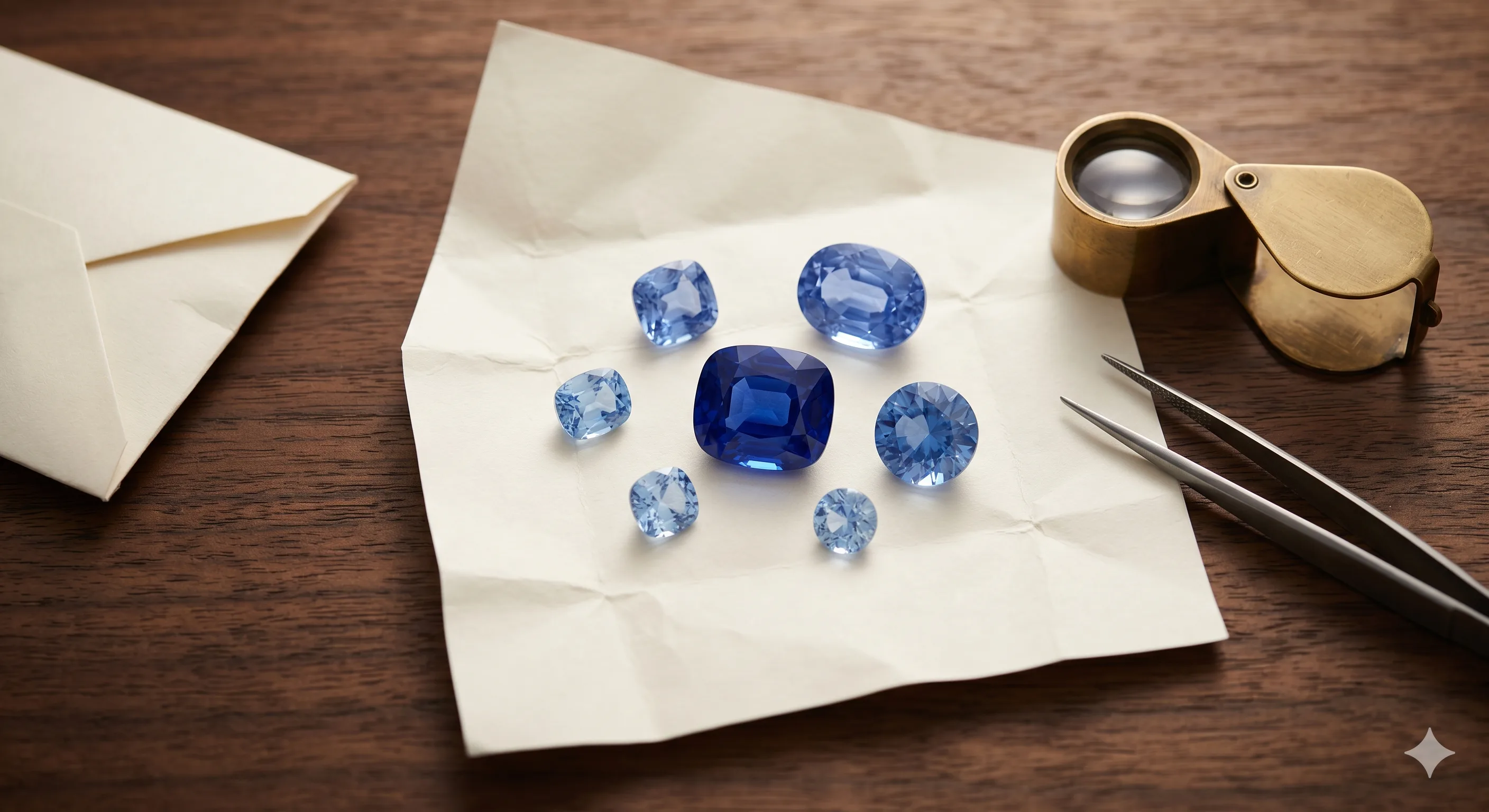
Explore the Crestonne collection to see currently available certified Ceylon sapphires with full treatment and origin documentation, or submit your specifications (color, carat, treatment preference, budget) through our custom sourcing service and we will search our network in Ratnapura and Elahera for material that matches. Every stone we source comes with a major laboratory report, a transparent price breakdown, and the provenance to back it up.