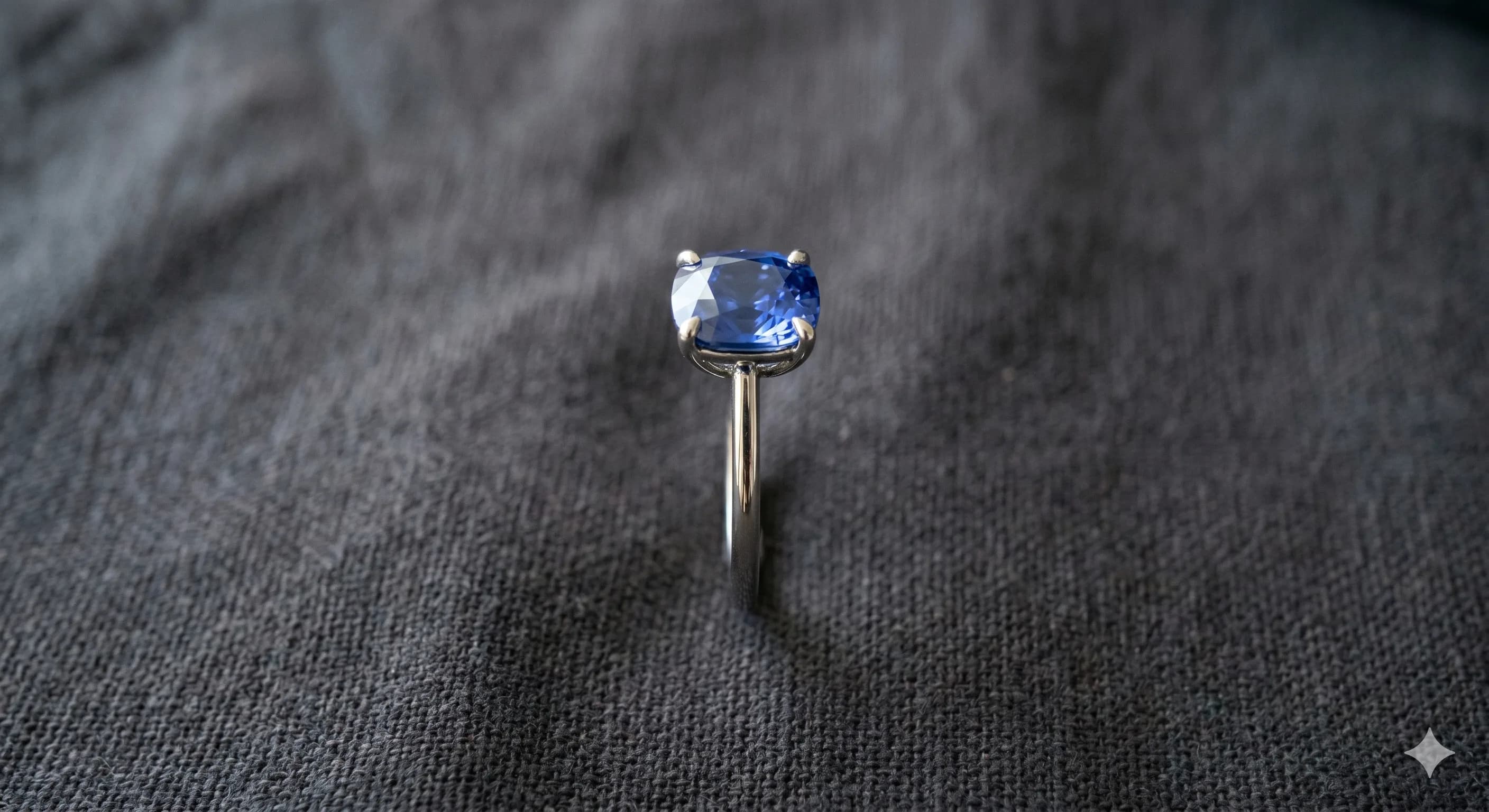
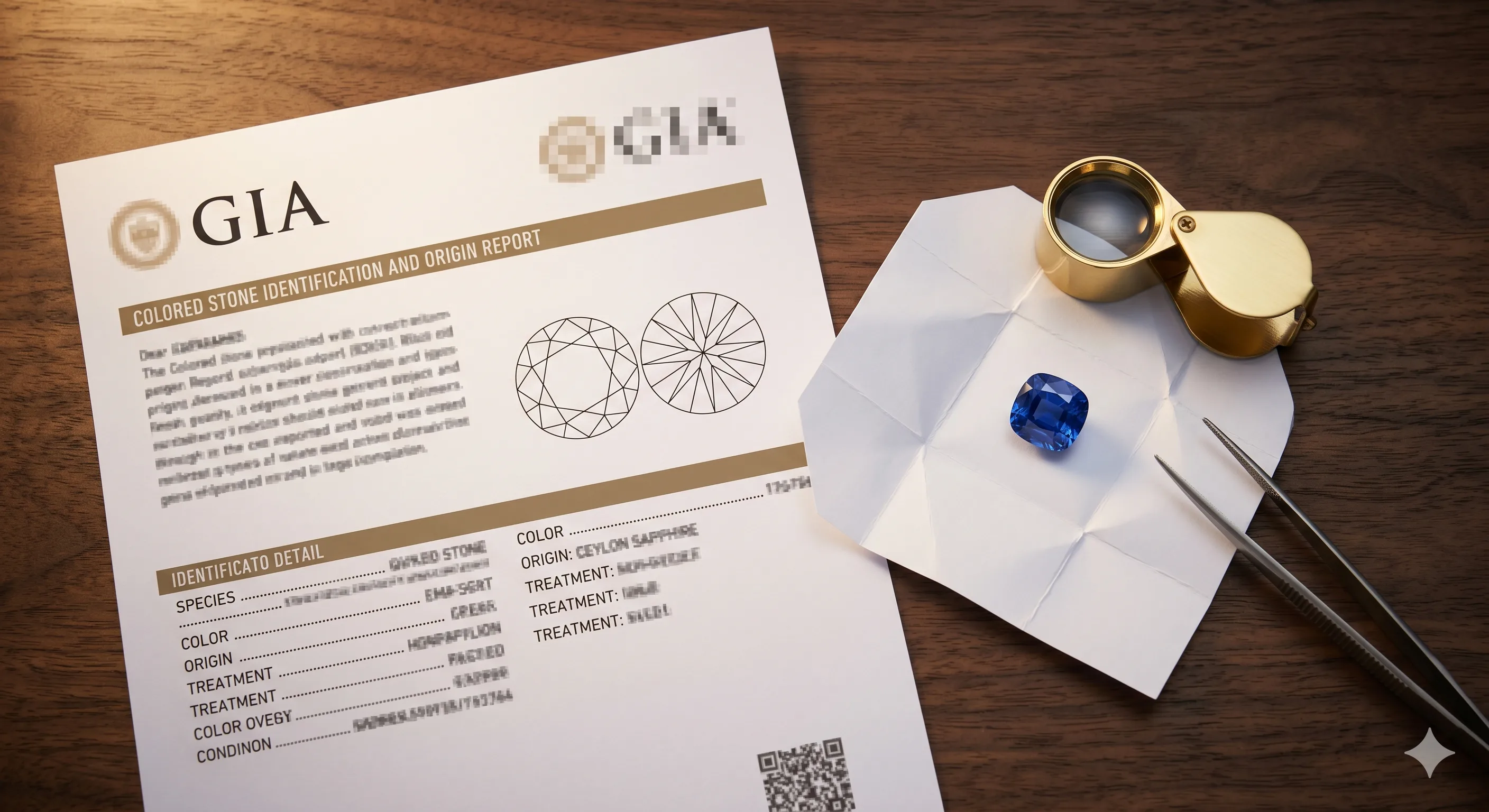
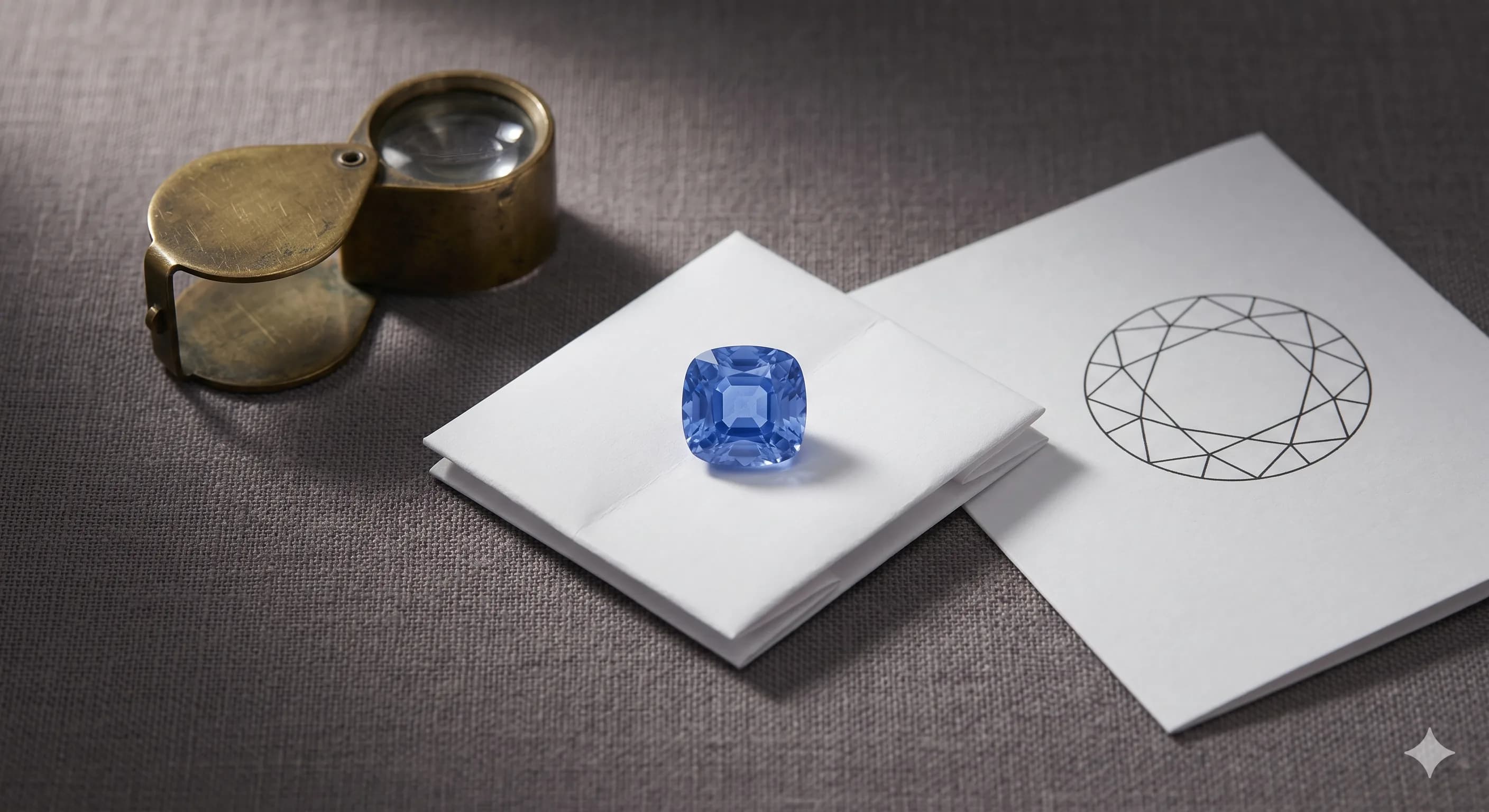
A blue sapphire engagement ring is a durable, heritage-rich alternative to a diamond. Sapphires rate 9 on the Mohs hardness scale, meaning they handle daily wear nearly as well as a diamond. The five decisions that matter when buying one are color (cornflower or royal blue for most buyers), carat weight relative to hand size, cut shape that suits your setting, a setting style that protects the stone, and laboratory certification from GIA, SSEF, or Gübelin confirming species, treatment, and origin. Ceylon sapphires from Sri Lanka are the benchmark for color quality in the colored-gem trade. Expect to spend $3,000 to $15,000 total for a certified ring in the common 1 to 3 carat range, with significantly more for unheated stones or top color grades. This guide covers each decision in order.
Why a Blue Sapphire Engagement Ring?
Sapphire is the oldest engagement stone in continuous Western use. Before De Beers' twentieth-century marketing campaign repositioned the diamond as the default, sapphire had been the traditional betrothal gem for roughly a thousand years, associated with fidelity, sincerity, and nobility across European tradition. Medieval clergy wore blue sapphires as a symbol of faithful service. Royal families across England, Germany, and Russia used sapphires in dowry and engagement jewelry throughout the seventeenth and eighteenth centuries.
The modern resurgence has two specific anchors. In 1981, Princess Diana's engagement ring featured a 12-carat oval Ceylon sapphire surrounded by diamonds, set in 18-karat white gold. The same ring now sits on Kate Middleton's hand. The visibility of that ring across four decades of public life has made the blue sapphire engagement ring not a rebellion against diamonds but a second mainstream option within the engagement category. US market data shows sapphire is the most commonly chosen colored-stone center for engagement rings, well ahead of emerald, ruby, or morganite.
The three functional reasons buyers choose sapphire over diamond today are: color (a diamond is neutral, a sapphire is a signature), price (a certified Ceylon sapphire of equivalent visual impact typically costs 40 to 60 percent of a comparable diamond), and meaning (for couples who want heritage without the newly minted quality of a diamond solitaire).
Sapphire vs Diamond for an Engagement Ring: The Durability Comparison
The sapphire vs diamond engagement question usually centers on whether a sapphire can actually hold up to decades of daily wear. It can, and the gemological reasons are specific.
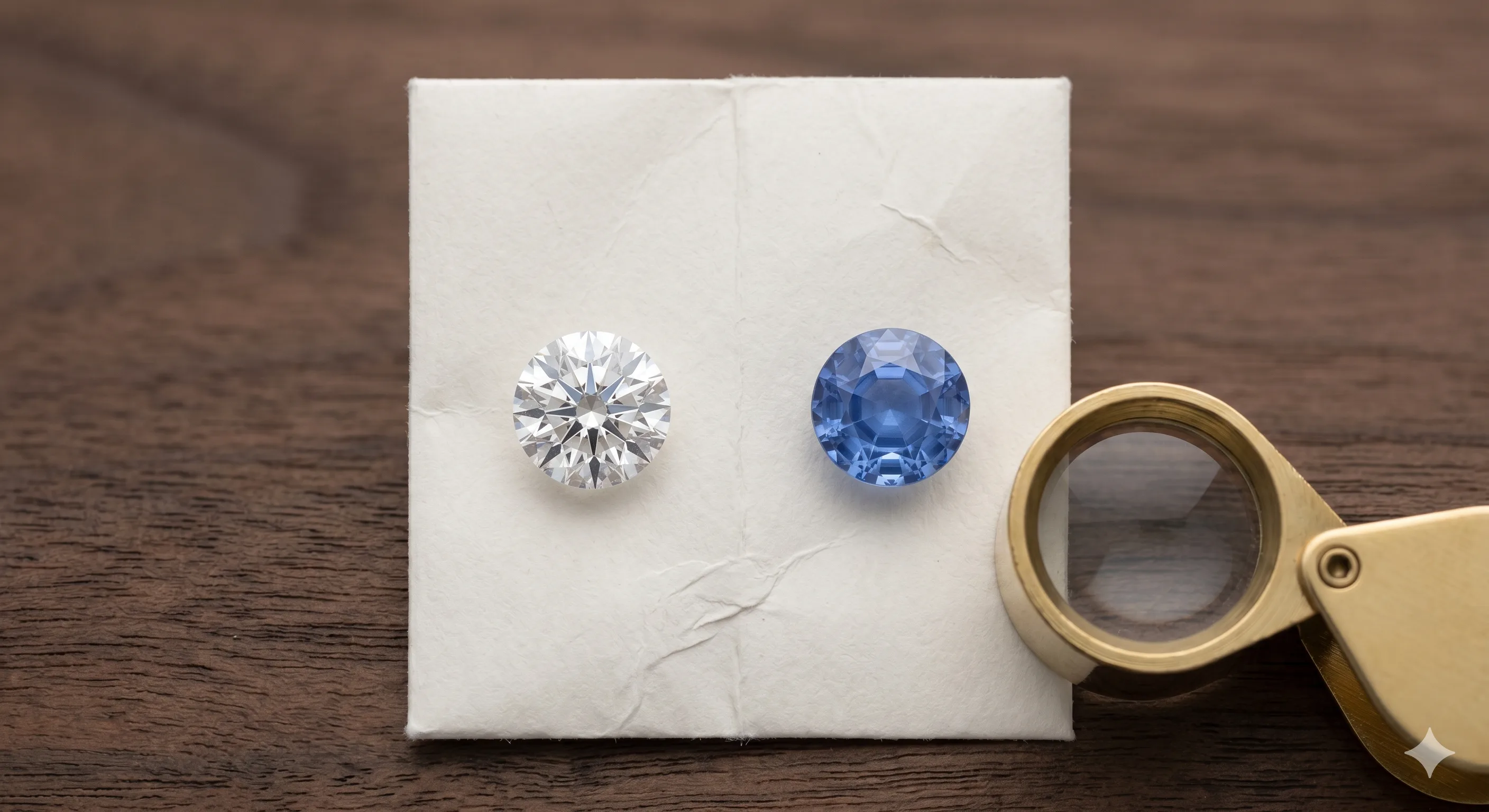
Sapphire (natural corundum) sits at 9 on the Mohs hardness scale. Diamond sits at 10. The Mohs scale is logarithmic, not linear, so the gap between 9 and 10 is larger than the gap between 8 and 9. But for engagement ring purposes, both stones clear the threshold for daily wear by a wide margin. The real-world benchmark is quartz at 7, because dust and grit in household air are mostly quartz. A stone softer than quartz (opal, pearl, turquoise, peridot) will accumulate micro-scratches from dust alone and should not be used as an engagement center stone. Sapphire, two full points above quartz, is effectively immune to everyday abrasion.
Where sapphire does differ from diamond is in toughness: how the stone resists chipping from a direct blow. Diamond has perfect cleavage planes, meaning a sharp impact at the wrong angle can split a diamond. Sapphire has no cleavage and is slightly more resistant to chipping than diamond in practice, particularly at prong contact points. This is why heirloom sapphires routinely outlive their original settings.
The one durability caveat worth knowing: heated sapphires with surface-reaching fractures sometimes have flux residue from the heating process that can become visible if the stone is repeatedly exposed to ultrasonic cleaning. For those stones, warm soapy water and a soft brush is safer than ultrasonic. Unheated stones, and heated stones without fractures, tolerate ultrasonic cleaning without issue. We cover the full unheated versus heated trade-off in detail elsewhere.
How to Choose the Color
Color is the single biggest decision and the one most buyers overthink. For a Ceylon sapphire engagement ring, the two target colors are:
Cornflower blue. Medium-light to medium tone, strong saturation, pure blue to slightly violetish blue. This is the classic Ceylon color, the one most associated with Sri Lankan material. Reads brilliantly in daylight, retains its blue under incandescent light, photographs well. Matches equally with white gold, yellow gold, and platinum.
Royal blue. Medium to medium-dark tone, strong to vivid saturation, pure blue. Typically associated with Burmese material but also produced in top Ceylon stones. Richer and more dramatic than cornflower. Slightly more demanding to light well on finer hands.
What to avoid:
- Inky blue (too dark, too low saturation). Reads black in low light. Common defect in over-heated or lower-grade stones.
- Greyish blue (low saturation with grey modifier). Reads "dull" rather than "blue."
- Greenish blue (secondary hue of green). Loses the recognizable sapphire character.
- Pale blue (too light). Reads "faded." Typically from very young crystal or lightly heated geuda.
The practical test is the three-light check: view the stone in direct daylight (near a north-facing window works best), under warm incandescent light, and under indirect indoor light. A good stone looks clearly blue in all three. A mediocre stone looks great in one and washed out in another. Ask the seller for images or video in multiple lighting conditions. Any serious dealer will provide them.
Carat Weight and Face-Up Size
Carat weight matters less than face-up size, which is measured in millimeters across the stone's longest dimension. This is an important distinction because sapphire is denser than diamond (specific gravity 4.00 for sapphire, 3.52 for diamond), so a 2-carat sapphire looks marginally smaller face-up than a 2-carat diamond of the same cut and proportions.
Typical face-up measurements for blue sapphire engagement center stones:
- 1 carat: about 6.0 to 6.2 mm round, 6.5 × 4.5 mm oval
- 2 carats: about 7.5 to 7.8 mm round, 8.5 × 6.5 mm oval or cushion
- 3 carats: about 8.8 to 9.2 mm round, 10 × 7 mm oval or cushion
- 4 carats: about 10 mm round, 11 × 8 mm oval
For most hand sizes (ring size 5 to 8), a center stone between 7 and 9 mm across its longest dimension creates a balanced engagement ring profile. Smaller than that and the stone reads as an accent on many hands. Larger than that and the ring starts to look like a cocktail piece rather than a daily-wear engagement ring.
Jumps at round-number thresholds affect sapphire pricing the same way they affect diamond pricing. A 0.95-carat stone costs meaningfully less than a 1.05-carat stone of the same quality. If face-up size matters more to you than a round carat number, looking for stones just under the threshold (1.9 ct, 2.8 ct, and so on) can stretch a budget considerably.
Cut Shapes That Work Best in an Engagement Setting
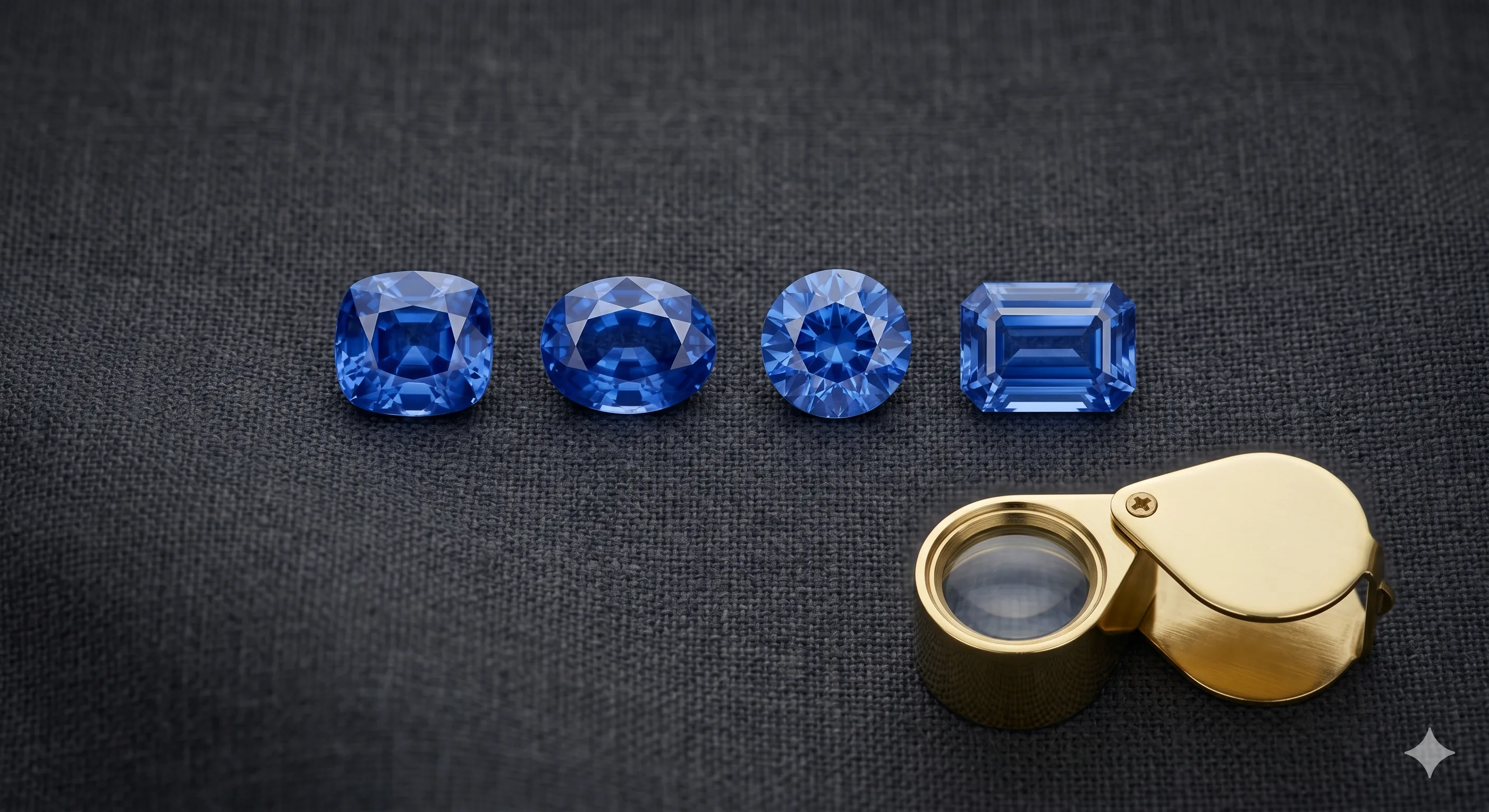
Ceylon sapphires are traditionally cut to retain weight, which means the most common traditional shapes are cushion mixed cut, oval mixed cut, and round mixed cut. All three work well in engagement settings. A few considerations by shape:
Cushion. The most popular shape for blue sapphire engagement rings. Flattering to most hand shapes, pairs well with both solitaire and halo settings, and retains the classic sapphire appearance. The Diana/Kate ring is an oval cushion variant.
Oval. Slightly elongates the finger visually. Strong choice for shorter fingers. Pairs particularly well with east-west settings and halo designs.
Round brilliant. Rare in traditional Ceylon cutting but available. Maximizes brilliance but typically loses more rough weight during cutting, so prices per carat are slightly higher for a given quality tier.
Emerald cut. Rectangular step cut. Shows color rather than brilliance; any color zoning is visible. Works only with top-color, eye-clean stones. Unusual choice that reads as deliberate and modern.
Pear and marquise. Strong visual character. Require a protective setting because the tips are the most vulnerable points on any gemstone.
Avoid shapes with thin points (marquise, pear, shield) unless you are committed to a setting that protects those points. For a pure daily-wear ring, cushion or oval is the path of least regret.
Settings That Protect the Stone
The setting is what turns a Ceylon sapphire ring from a pretty object into a piece of jewelry that survives thirty years of daily wear. Four setting styles we recommend for engagement sapphires, in order of protectiveness:
Bezel. A metal rim fully encircles the stone. Maximum protection, lowest profile, most modern visual character. The bezel can be full (complete rim), half (top and bottom only), or three-quarter. A bezel-set sapphire is the single most durable engagement configuration and the one we recommend for anyone in an active profession (medical, surgical, manual trades, athletics).
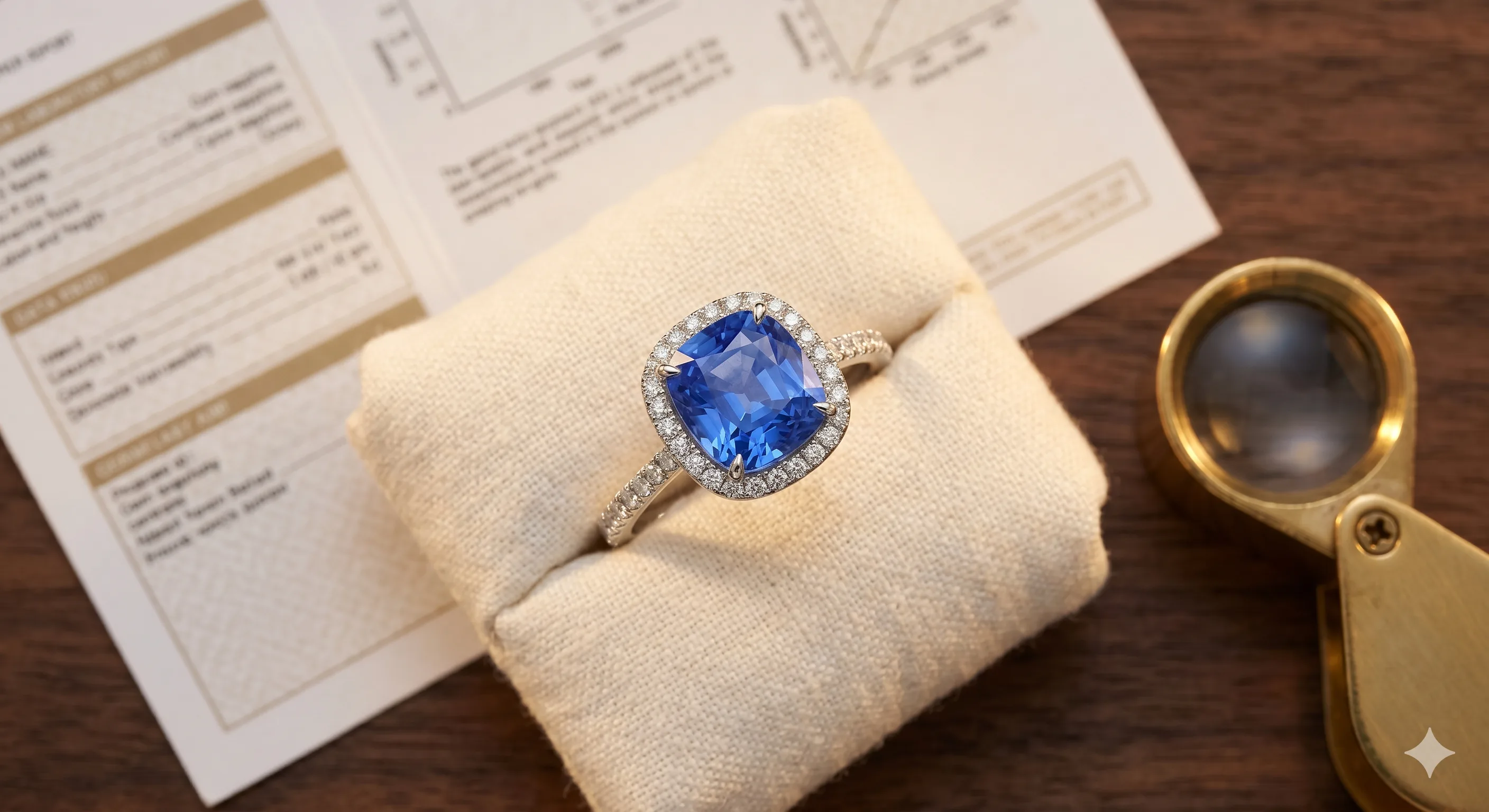
Halo. A ring of small diamonds or sapphires surrounds the center stone. Visual enlargement of the center and some impact protection from the halo stones. The Diana/Kate design. Works across all size ranges.
Low-profile four-prong. Classic solitaire form with the stone seated low in the setting and short, thick prongs. More vulnerable than a bezel but still reasonable for daily wear if the prongs are inspected annually. Highest classical beauty.
Three-stone. Center sapphire flanked by two smaller diamonds or sapphires. Symbolic of past, present, future. Good protection from the side stones. Works well with cushion and oval center shapes.
What we steer clients away from for engagement use: tall cathedral six-prong settings (prongs catch on fabric and loosen over time) and tension settings (the pressure holding the stone in place is a single point of failure).
For metal, both 18k white gold and platinum work well with blue sapphires. Yellow gold creates a warmer, more vintage read. Rose gold works but softens the visual impact of the blue — better with teal or violet-leaning sapphires than classic cornflower.
Why Certification Is Non-Negotiable for an Engagement Stone
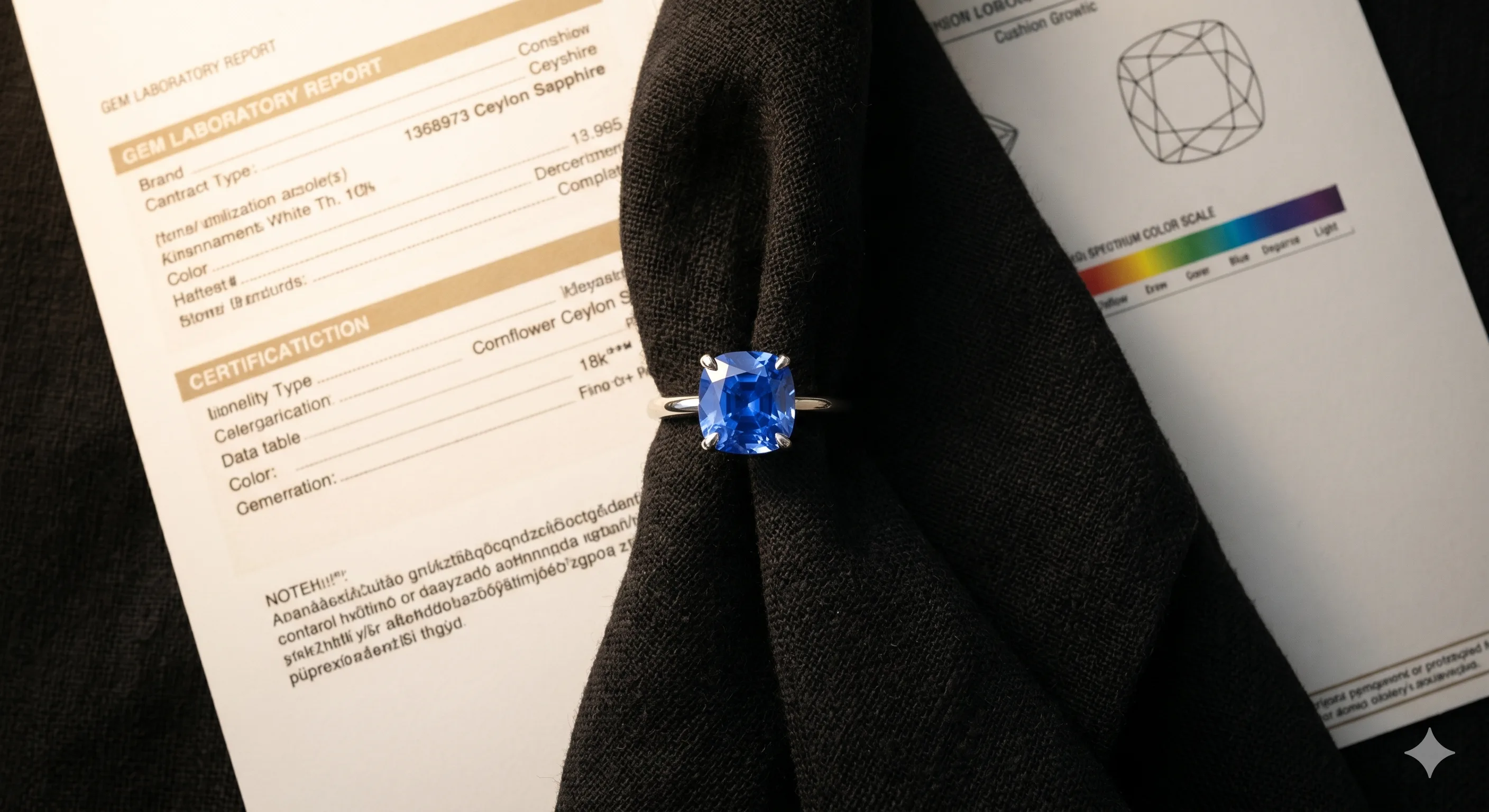
An engagement ring is among the most emotionally and financially significant jewelry purchases a person makes. The stone should come with certification from a major laboratory. For Ceylon sapphires specifically, that means a report from GIA (baseline), SSEF, or Gübelin (premium origin determination for stones above 2 carats).
The report confirms three things: that the stone is a natural sapphire (not synthetic, not composite), that you know its treatment status, and that origin is verified. Without certification, all three of those data points rest on the seller's word. For a ring that will live on your partner's hand for decades, that is not where the trust should live. Our walkthrough of how to read a GIA sapphire certificate covers each field of the report and how to verify its authenticity. For the prior step of confirming the stone is genuinely a Ceylon sapphire, see our guide on how to tell if a Ceylon sapphire is real.
A 2023 inquiry from a couple planning their proposal came in through our custom sourcing channel: they wanted a cornflower blue Ceylon center stone around 3 carats, unheated, with an SSEF report, set in an 18k white gold halo. Budget was $25,000 all-in. We spent six weeks working with our network in Ratnapura and Colombo, reviewed eleven stones, and ended with a 3.1-carat cushion-cut unheated Ceylon sapphire, medium-saturation cornflower blue, SSEF-certified, with the origin call reading "Sri Lanka (Ceylon)." The ring was set by a Colombo jeweler in 18k white gold with a diamond halo and low-profile prongs. Total landed at just under $24,000. Two years of daily wear later, the client sent us a photo during their anniversary trip. The stone shows zero visible abrasion. The setting has had one prong re-tipping. That is exactly what a well-specified Ceylon sapphire engagement ring is supposed to do.
Budget by Size: What a Blue Sapphire Engagement Ring Costs in 2026
Approximate all-in pricing for a certified Ceylon sapphire engagement ring (center stone + setting) in 2026, by size band:
| Center size | Heated Ceylon, good color | Unheated Ceylon, fine color | Exceptional unheated |
|---|
| 1 ct | $3,000 to $6,500 | $6,500 to $12,000 | $12,000 to $18,000 |
| 1.5 ct | $4,500 to $9,000 | $10,000 to $20,000 | $20,000 to $30,000 |
| 2 ct | $5,000 to $12,000 | $12,000 to $25,000 | $30,000 to $55,000 |
| 3 ct | $12,000 to $25,000 | $25,000 to $55,000 | $80,000 to $150,000+ |
Figures include the center stone, a standard halo or solitaire setting in 18k white gold or platinum, and major lab certification. Custom designs, premium side stones, and designer settings add to these ranges.
For the deeper breakdown of stone-only pricing by size and treatment tier, see our Ceylon sapphire price per carat guide.
Explore the Crestonne collection for certified Ceylon sapphires available as loose stones for setting, or submit your exact specifications (color, carat, cut, treatment preference, budget) through our custom sourcing service. Every stone we source comes with a major laboratory report, a transparent breakdown of why the price is what it is, and the provenance from Sri Lanka to confirm the stone is what the report says it is.