Sri Lankan moonstone is the finest in the world for one specific reason: adularescence. That soft blue glow that floats inside the stone is caused by the particular geology of Sri Lanka's feldspar deposits, and no other source replicates it at the same intensity. Ceylon moonstones have been the benchmark for the gem trade since at least Roman times, when the stones were believed to carry light captured from the moon itself.
This guide covers what adularescence is and how it forms, what separates a quality Sri Lankan moonstone from ordinary material, which varieties are rarest, and what to check before you buy.
What Is Adularescence?
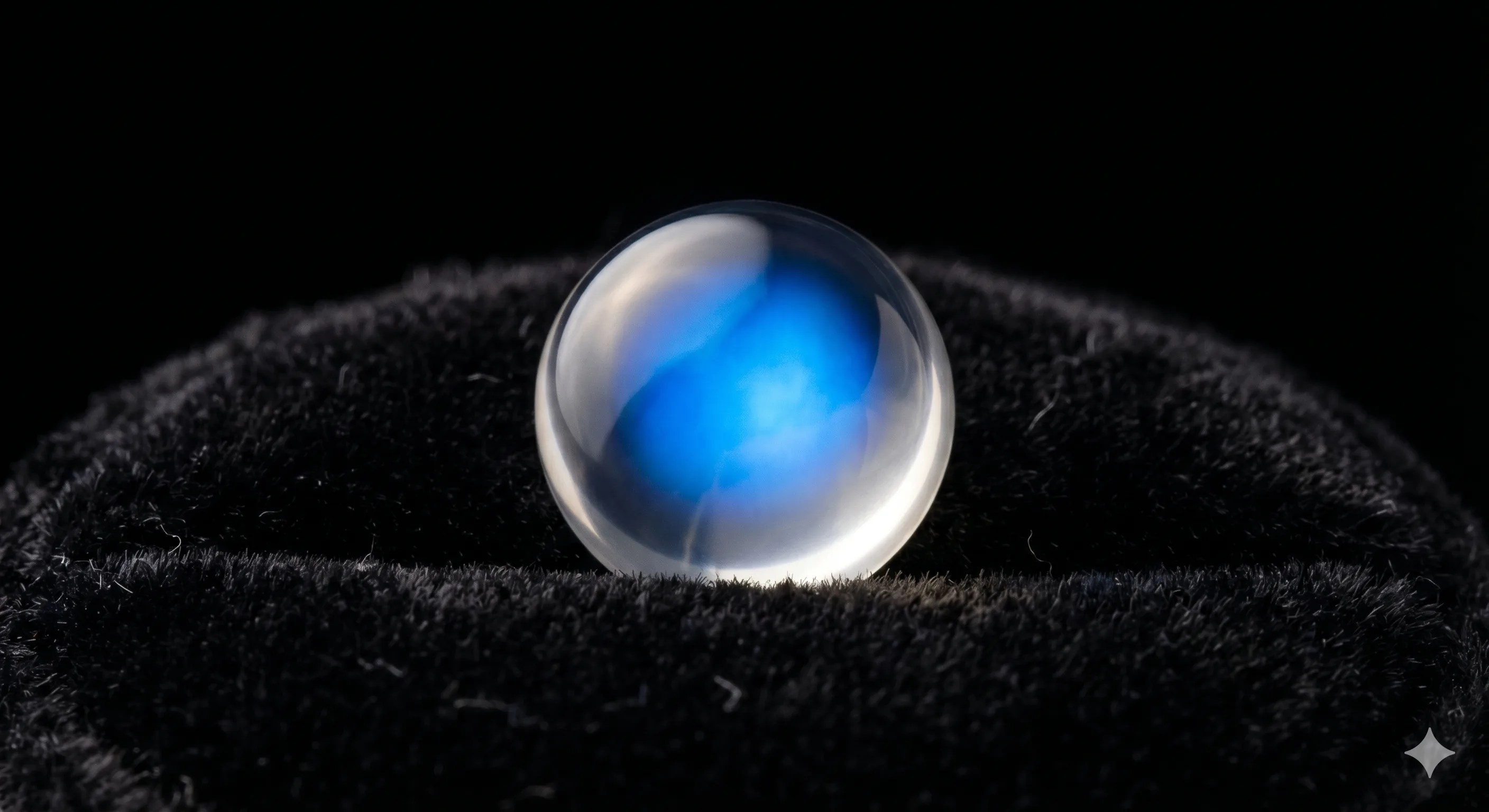
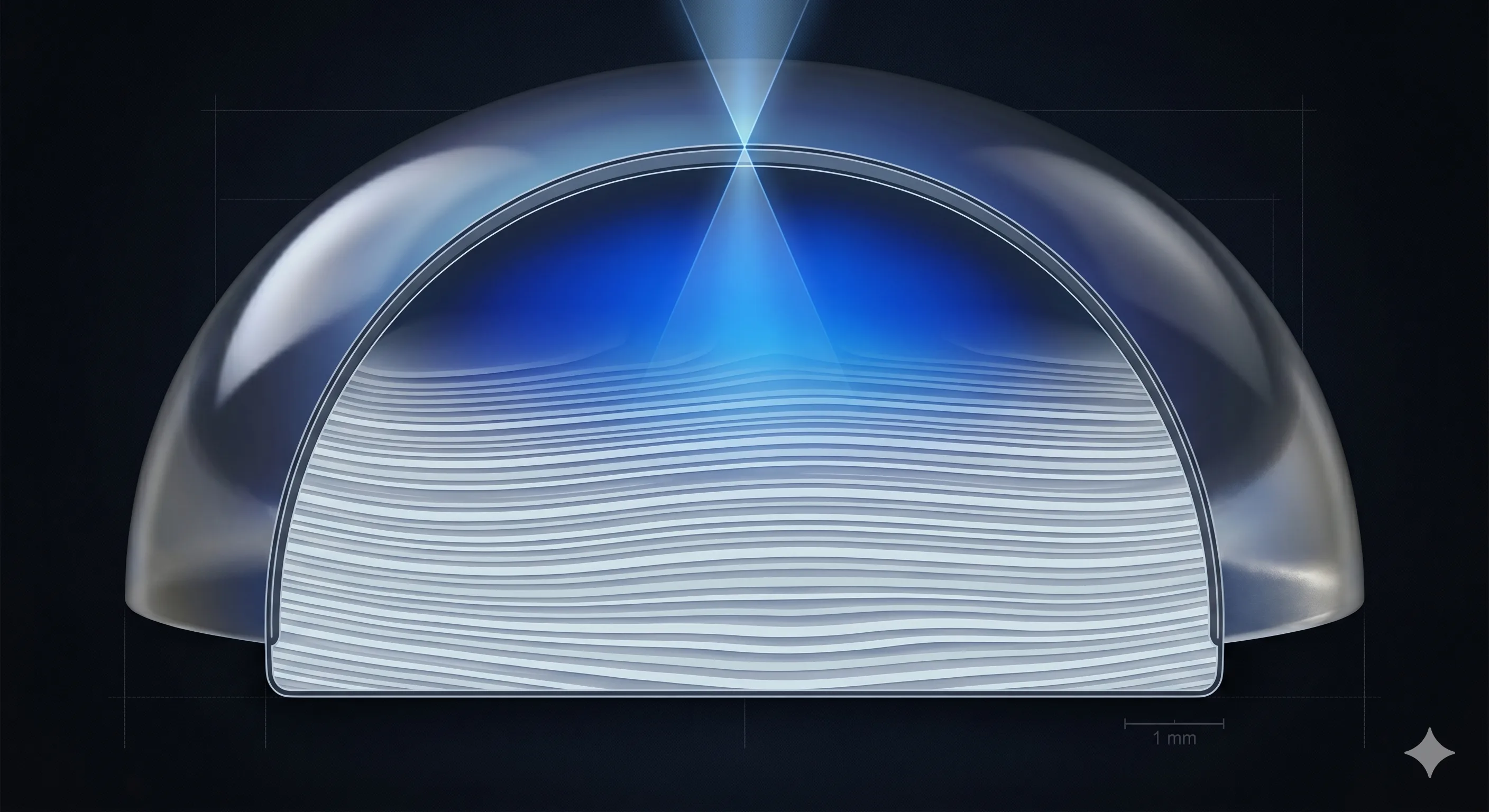
Moonstone is a variety of feldspar, specifically orthoclase. What distinguishes it from ordinary feldspar is its internal structure: alternating microscopic layers of orthoclase and albite, each only a few nanometres thick. When light enters the stone, it scatters between these layers and re-emerges as a soft, diffused glow that moves as you tilt the stone.
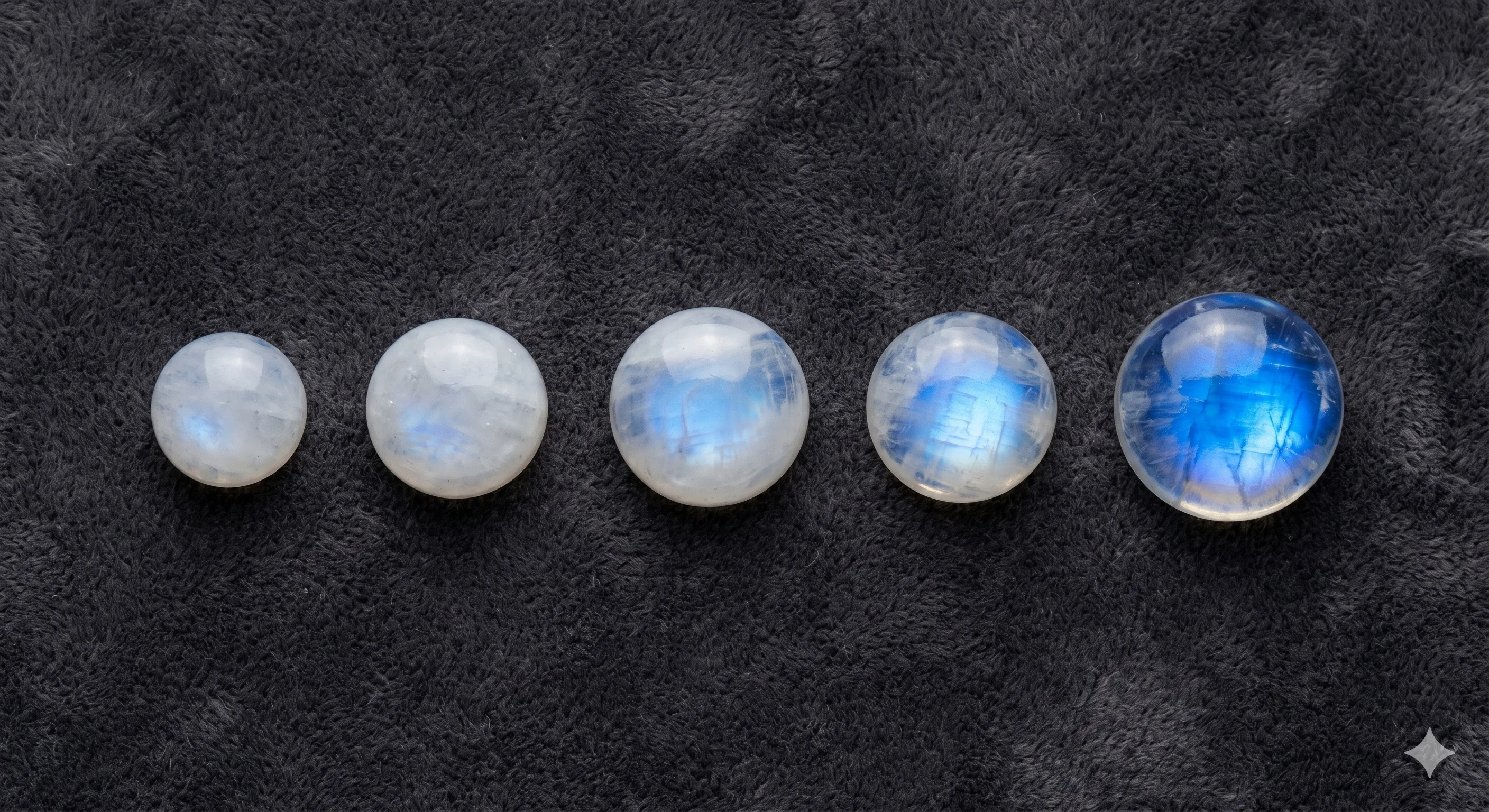
The color and strength of that glow depend on layer thickness. Layers around 100 nanometres thick produce blue adularescence. Thicker layers scatter more light and produce a white or silvery sheen. Sri Lanka's Meetiyagoda deposit, in the Matara District of the Southern Province, produces an unusually high proportion of stones with the fine, regular layering needed for a blue float.
That precision is not engineered. It is geological luck.
Sri Lankan Moonstone vs Other Sources
The two main commercial sources are Sri Lanka and India (primarily Rajasthan). The difference is visible under daylight.
Indian moonstones tend toward a white or silver sheen. The adularescence is real, but it diffuses broadly rather than concentrating into a defined spot that rolls across the surface.
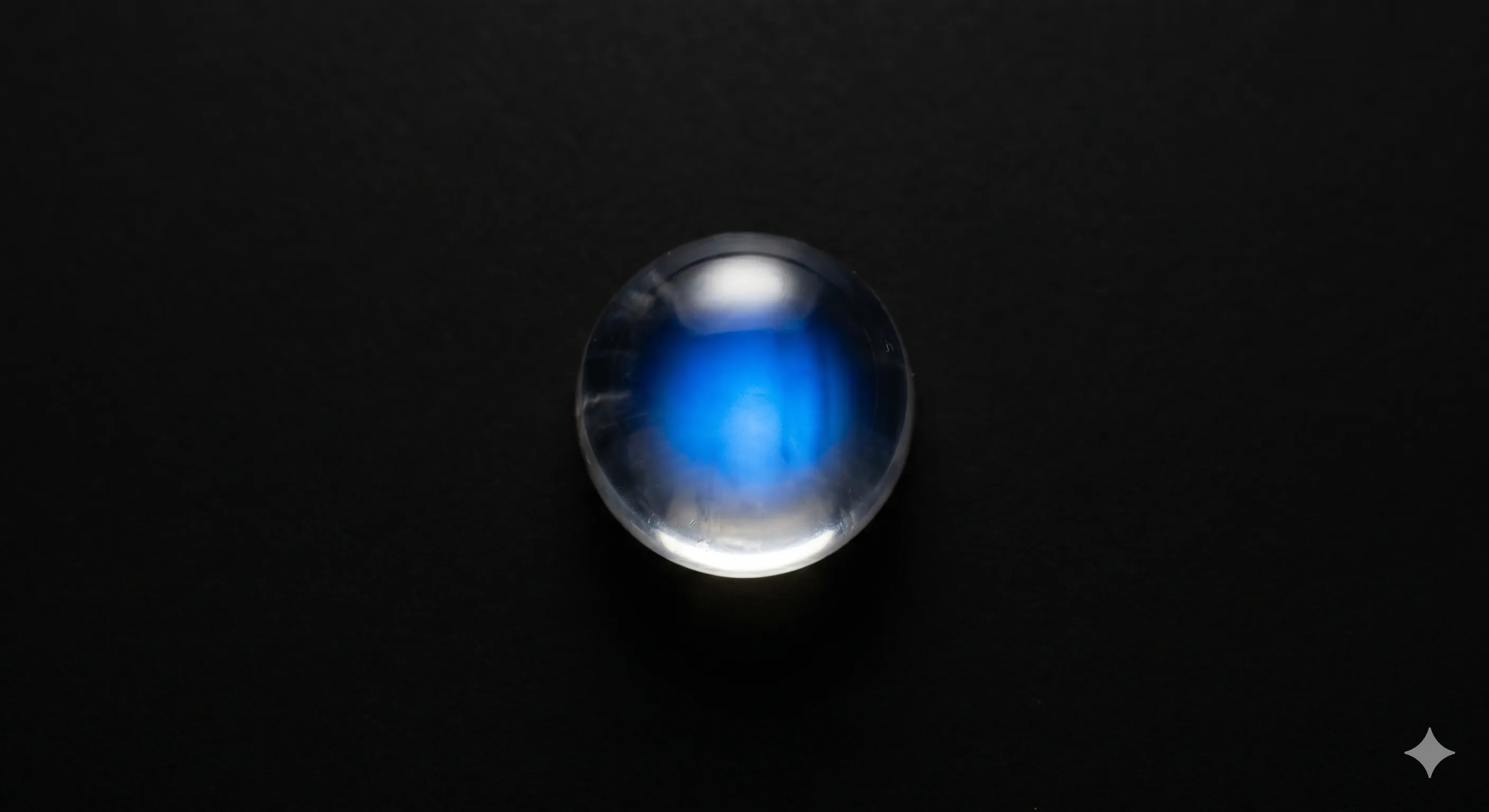
Sri Lankan moonstones from Meetiyagoda produce a tighter, more directional blue float over a colorless or lightly tinted body. The glow moves as you tilt the stone, like watching light travel across still water.
Tanzania also produces blue-sheen material, but Sri Lankan stones remain the trade reference for blue adularescence because of their body clarity and the consistent depth of the effect. When a jeweler says "Ceylon moonstone," they mean the blue-sheen variety from Sri Lanka. The name carries a specific meaning, not just a geographic one.
Varieties Worth Knowing
Colorless with blue sheen. The classic Ceylon moonstone. High transparency, no body color, strong blue adularescence. This is the most valuable configuration and what "blue sheen moonstone" refers to in trade shorthand.
White body with silver or white sheen. Common, widely available, significantly less valuable. Attractive in its own right but a different stone in terms of rarity and price.
Peach or orange body. Warm tones from trace iron. Less common than white, popular for its warm appearance. Rarely shows strong blue adularescence; the optical phenomenon and the body color work against each other.
Cat's eye moonstone. Rare. The stone shows both adularescence and chatoyancy: a single bright streak running across the cabochon alongside the blue float. This requires a dense, aligned concentration of needle inclusions. Found occasionally in the Ratnapura district. A clean cat's eye moonstone with a strong rolling eye sits in a different price category entirely from standard moonstone.
How to Evaluate Quality
Clarity. The ideal moonstone is transparent or near-transparent. Light should pass visibly through the body. Milky or opaque material is common and inexpensive. Some sellers use proprietary grade terms, but none are standardised across labs: use your eyes.
Adularescence strength. Rotate the stone under a single light source. A strong blue float that stays bright from multiple angles indicates well-layered material. Weak, patchy, or only visible from directly overhead suggests irregular layering.
Centering. The floating glow should appear at or near the center of the cabochon when held flat under a light. An off-center effect means the cutter did not orient the stone correctly to the layer planes. This is a cutting flaw, not a geological one, and it depresses value.
Body color. Colorless is the premium. Milky, grey, or tinted bodies are downgrades unless the stone is a peach or orange variety, which is valued on different criteria.
Dome height. Moonstones are cut as cabochons. Too flat and the adularescence disappears. Too tall and the stone sits uncomfortably in a setting. Optimal dome height is roughly one-third of the base diameter. Deviation in either direction is a sign the cutter prioritized weight retention over optical performance.
A Founder Note
The first Ceylon moonstone I held in Colombo was not the most expensive stone we evaluated that trip. It was a 4.2 ct colorless piece, slightly off-round, with a small feather inclusion visible from the side. The dealer set it under a single bulb on dark cloth and tilted it once. The blue came up like light through still water: centered, deep, moving slowly across the dome. Nothing in a photograph does that justice. You understand immediately why the Romans thought the moon lived inside these stones.
It sold before we left the building.
Sri Lankan Moonstone in Jewelry
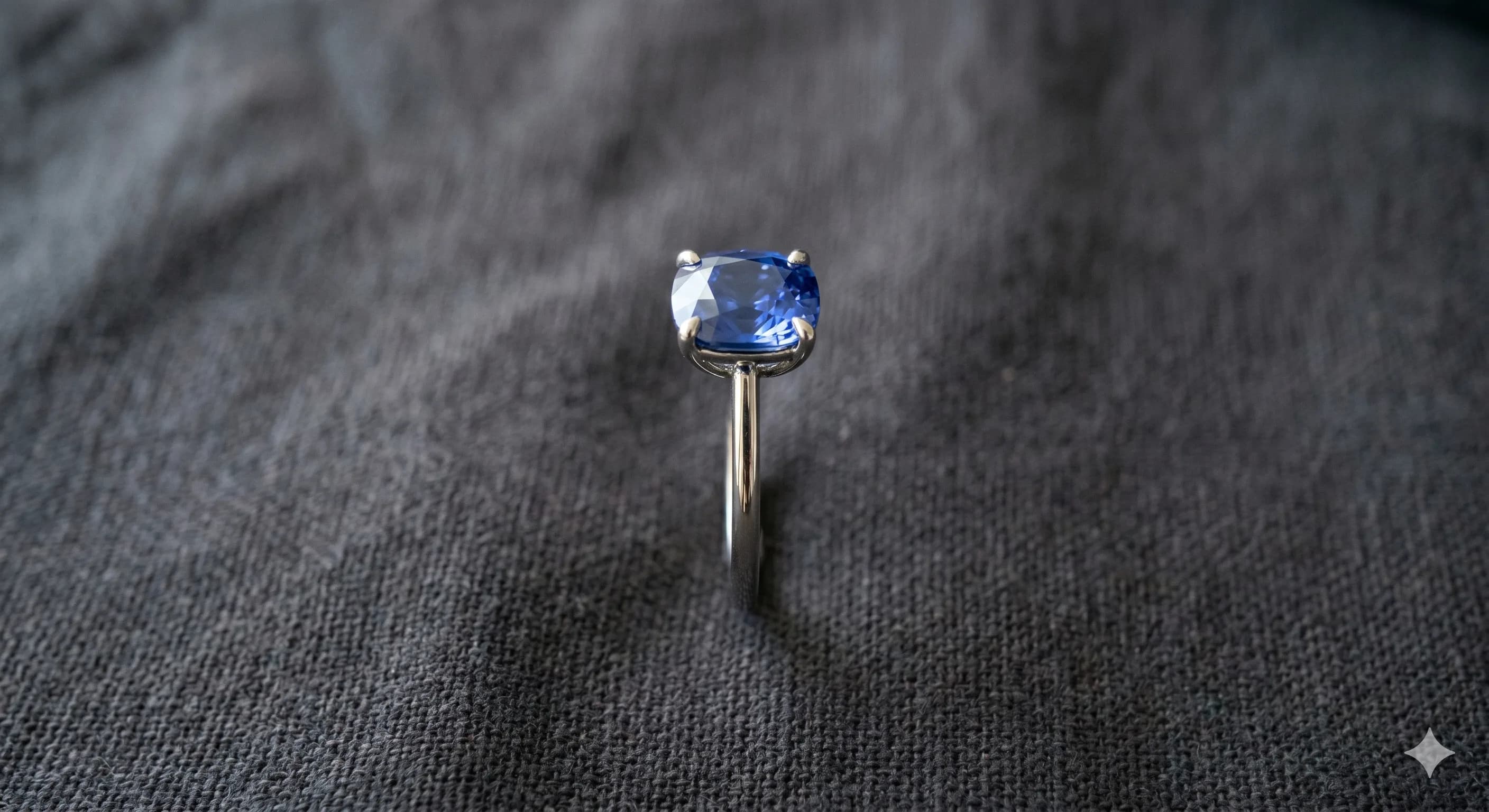
Moonstone sits at Mohs 6 to 6.5 on the hardness scale. Sapphire is Mohs 9. That gap matters in practice: moonstone acquires fine surface scratches with daily contact, and the thin feldspar layers that create the adularescence are vulnerable to sharp knocks.
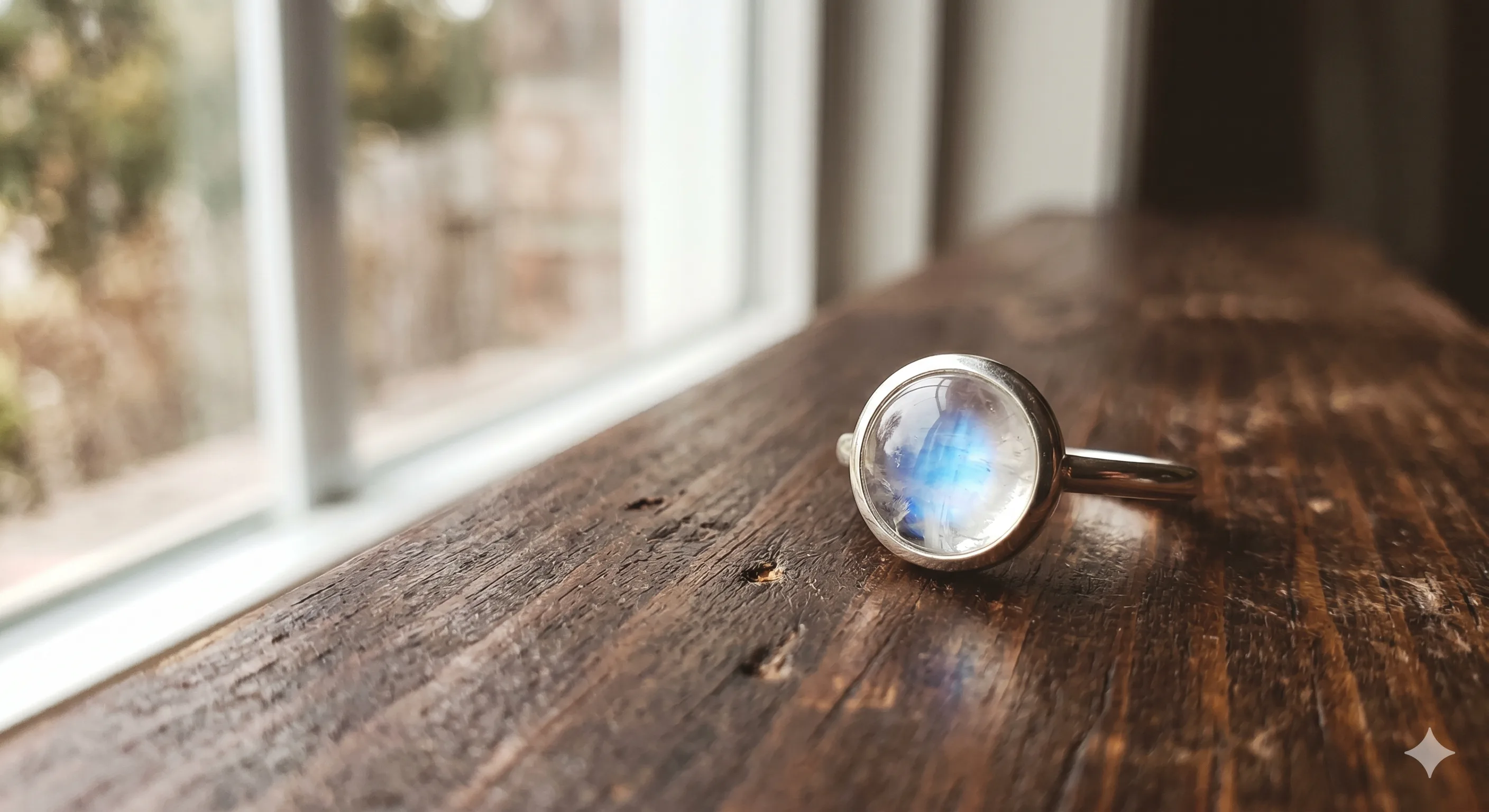
For rings, bezel settings are strongly preferred over prong settings. A bezel wraps the stone's girdle in metal, protecting the edge from lateral impact. Prong settings leave the stone exposed at the sides, and moonstone chips at the girdle under force.
For pendants and earrings, the durability concern is smaller. These settings see less mechanical stress, and moonstone in earrings is one of the most practical ways to wear the stone daily without managing damage risk.
If you are choosing moonstone for a ring worn regularly, factor in re-polishing. A skilled lapidary can remove light surface scratches every few years without affecting the adularescence, because only the outermost surface layer is involved.
You can explore what we currently have in our Sri Lankan gem selection at the Crestonne collections. Moonstones are among the stones we source directly from the Meetiyagoda area and the Southern Province.
If you are working through Sri Lankan optical phenomena, the star sapphire from Sri Lanka is a natural companion: both asterism and adularescence are unique to Sri Lankan geology, and both are best evaluated in person rather than from photographs.
For a broader look at what makes rare Sri Lankan stones worth understanding before you buy, the padparadscha sapphire guide covers the rarest color variety from the same island, with similar attention to how the trade grades optical and color effects that photographs routinely fail to capture.
Where to Buy Ceylon Moonstone
The same principles that apply to sapphires apply here. Source from sellers who can identify country of origin and ideally the mine region, who disclose any treatments (dyeing and surface-filling are used on lower-grade commercial moonstone), and who can show you the stone under a controlled light source.
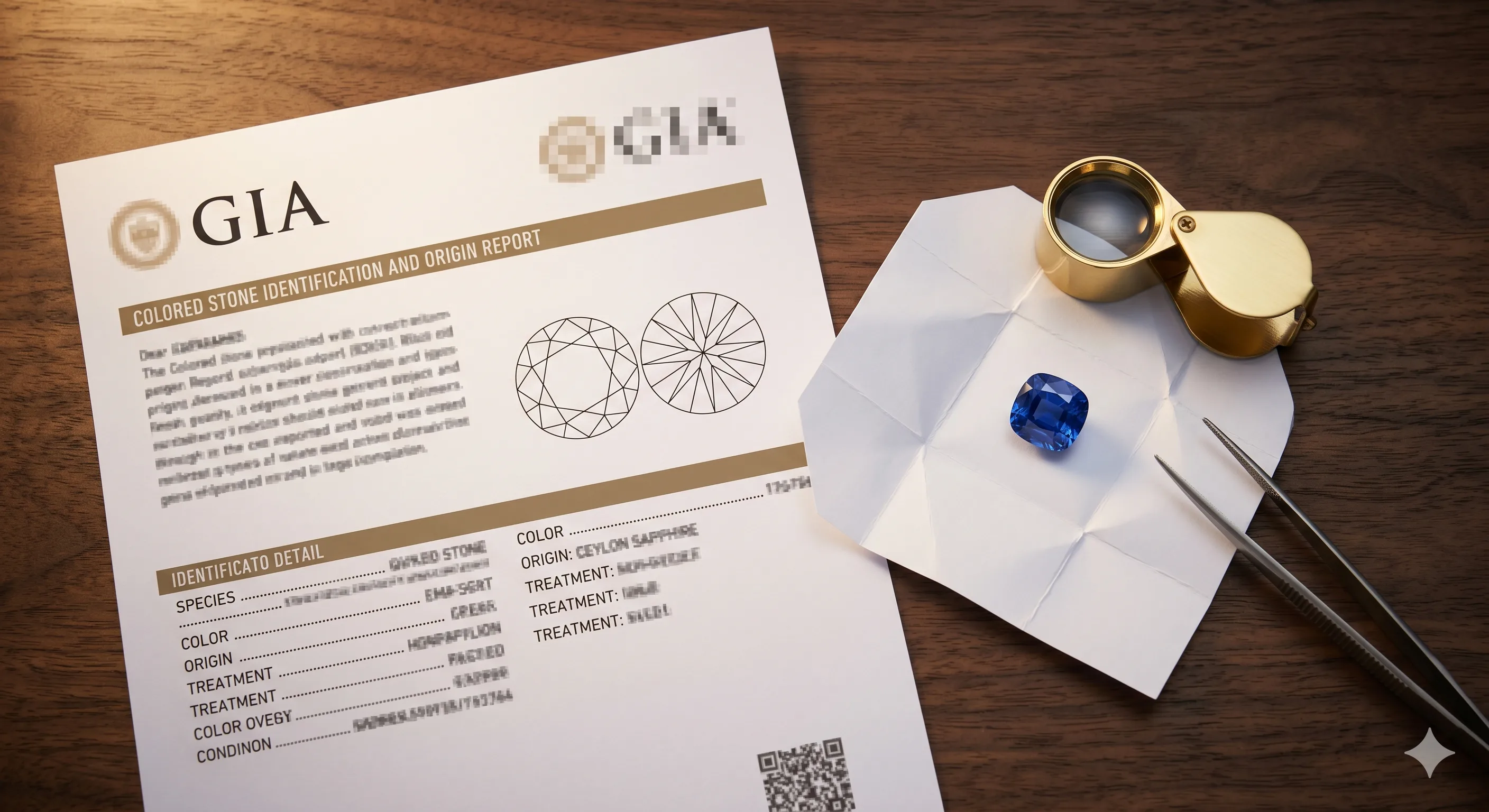
Certification is less standardised for moonstone than for sapphire. GIA, Gübelin, and SSEF all issue identification reports that confirm species and origin, but these are less common in the moonstone market than in the sapphire market. A reputable seller's provenance documentation, backed by direct sourcing, is often the primary assurance.
If you have specific requirements — sheen intensity, body color, carat weight, collector-grade material — we source to specification. Describe what you are looking for through our custom sourcing form and we will work from there.