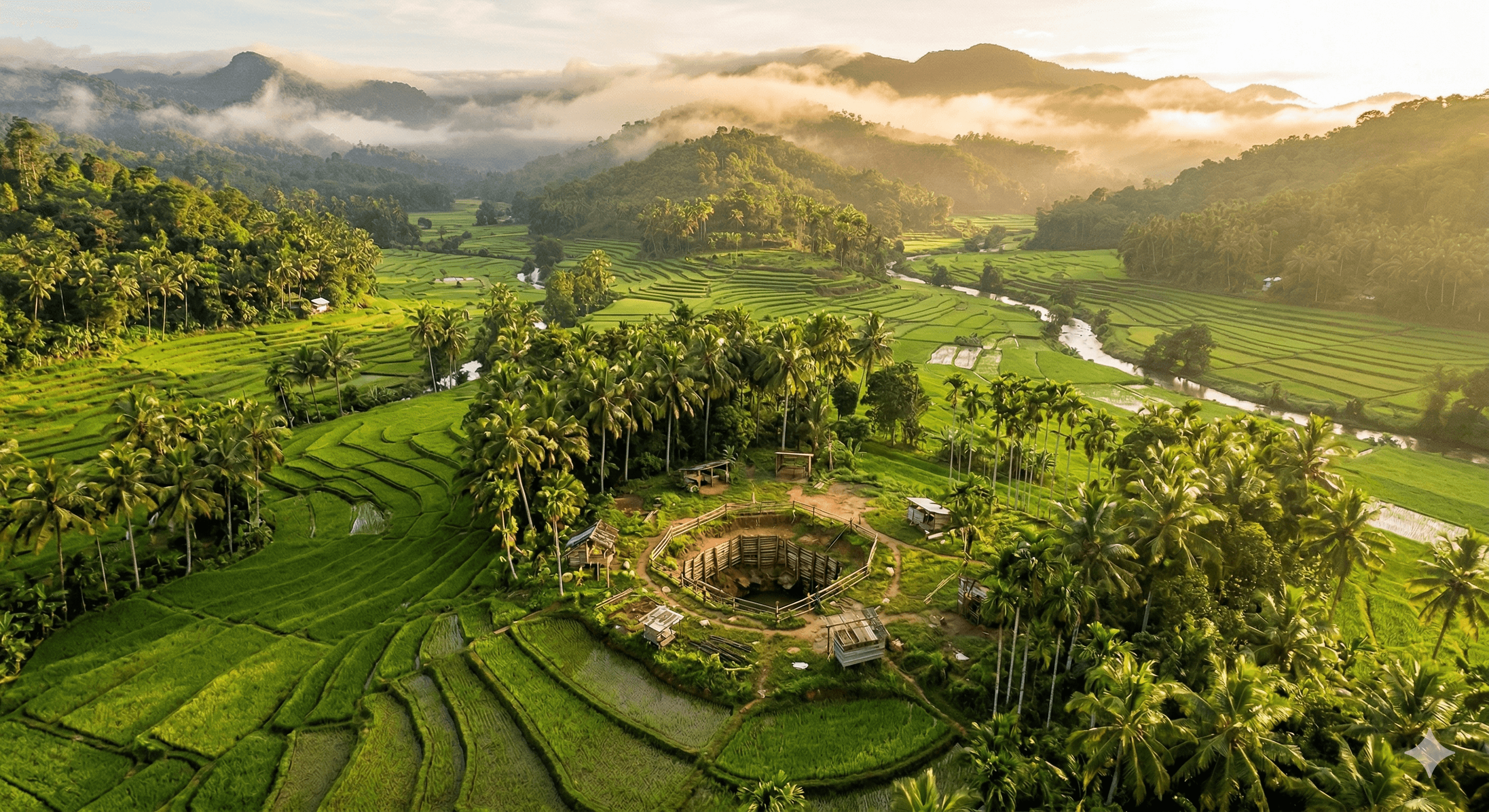
An ethically sourced Ceylon sapphire means a stone mined in Sri Lanka under the country's regulated, small-scale mining model, cut locally by skilled lapidaries, and sold with full documentation of its journey. It does not mean a stone that carries a "fair trade" label, because no widely recognized fair trade certification exists for colored gemstones. The term "ethical" in the gem industry is used loosely, often as marketing language with nothing behind it. What matters is the specifics: who mined it, under what conditions, with what environmental oversight, and whether the seller can tell you.
Here is what ethical sourcing actually looks like for Sri Lankan sapphires, what Crestonne does differently, and which claims you should question.
Why "Ethical" Is a Loaded Word in the Gem Industry
The diamond industry created a framework for ethical sourcing after the Kimberley Process was established in 2003 to address conflict diamonds. Colored gemstones have no equivalent. There is no Kimberley Process for sapphires, no universally recognized chain-of-custody system, and no mandatory disclosure of mining conditions.
This means any seller can describe their stones as "ethically sourced" without proving anything. The phrase has no legal definition and no enforcement mechanism. Some sellers use it meaningfully, backed by documented supply chains and personal relationships with mining communities. Others use it because it sounds good on a product page.
The difference between the two is verifiable specifics. A seller who can name the mining district, describe the extraction method, and explain their relationship with the people who actually dig the stones is worth listening to. A seller who writes "ethically sourced" in their marketing and changes the subject when you ask for details is not. For a comparison of how sourcing ethics differ across the three major sapphire origins, including the significant concerns around Myanmar, see our Ceylon vs Kashmir vs Burmese sapphire guide.
How Does Sri Lanka's Small-Scale Mining Model Work?
Sri Lanka's gem mining industry operates fundamentally differently from the large-scale industrial operations found in countries like Australia, Thailand, or parts of East Africa. The model is built around small-scale, family-operated or community-operated pits, and it has worked this way for centuries.
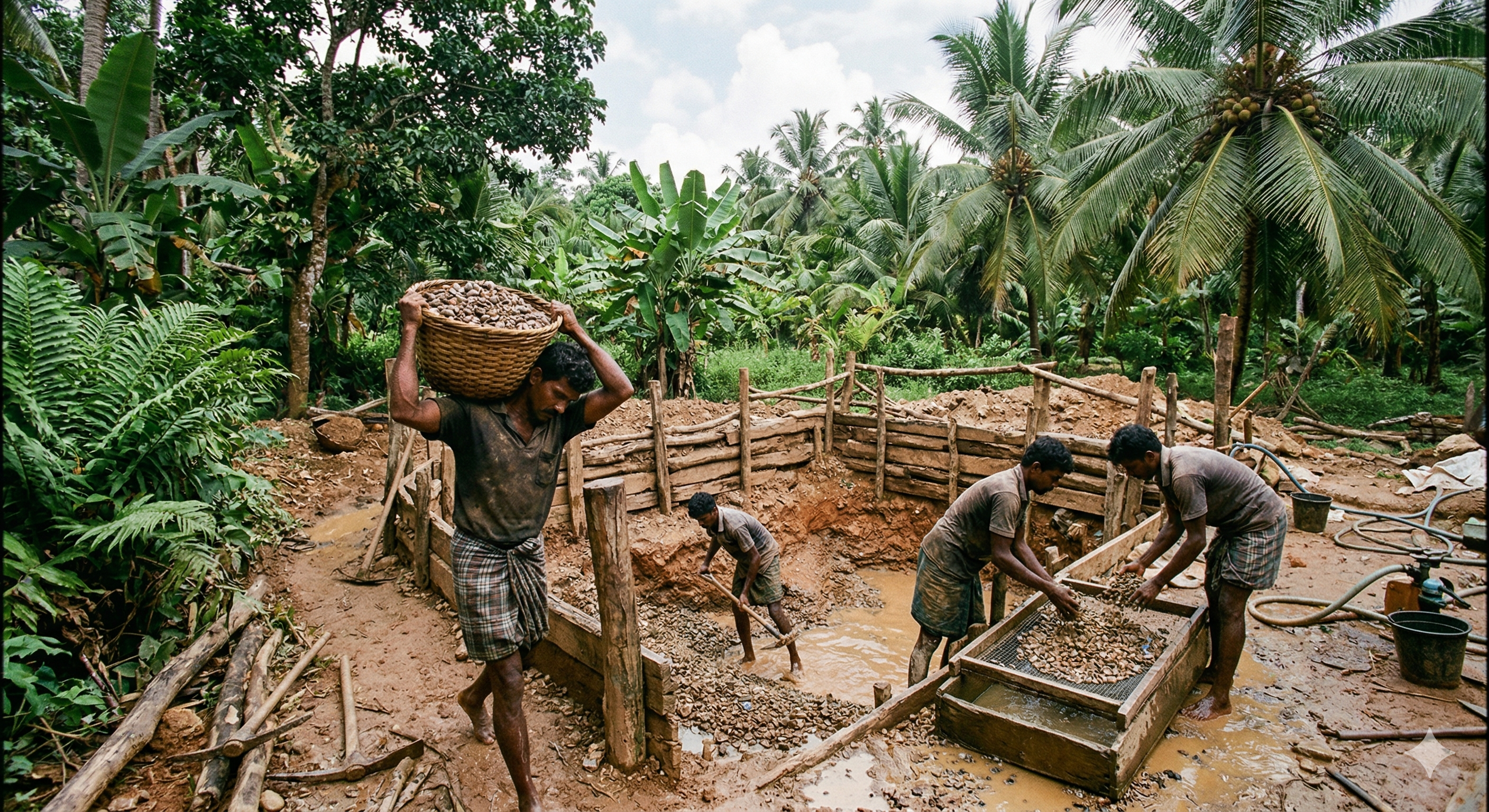
In the Ratnapura district (the name translates to "City of Gems"), a typical mining operation involves a team of 5 to 15 workers sinking a shallow pit into alluvial gravel. The work is done by hand: digging with basic tools, hauling material to the surface in baskets, and washing the gravel in nearby streams to separate the gem-bearing illam from ordinary rock. There is no blasting, no heavy machinery, and no open-pit scarring of the landscape.
The Sri Lankan government regulates this through the National Gem and Jewellery Authority (NGJA). Miners must hold a license, and there are restrictions on where and how deep they can dig. The licensing system is not perfect, but it exists and is enforced. Sri Lanka small scale gem mining operates within a legal framework that many competitor origins simply do not have.
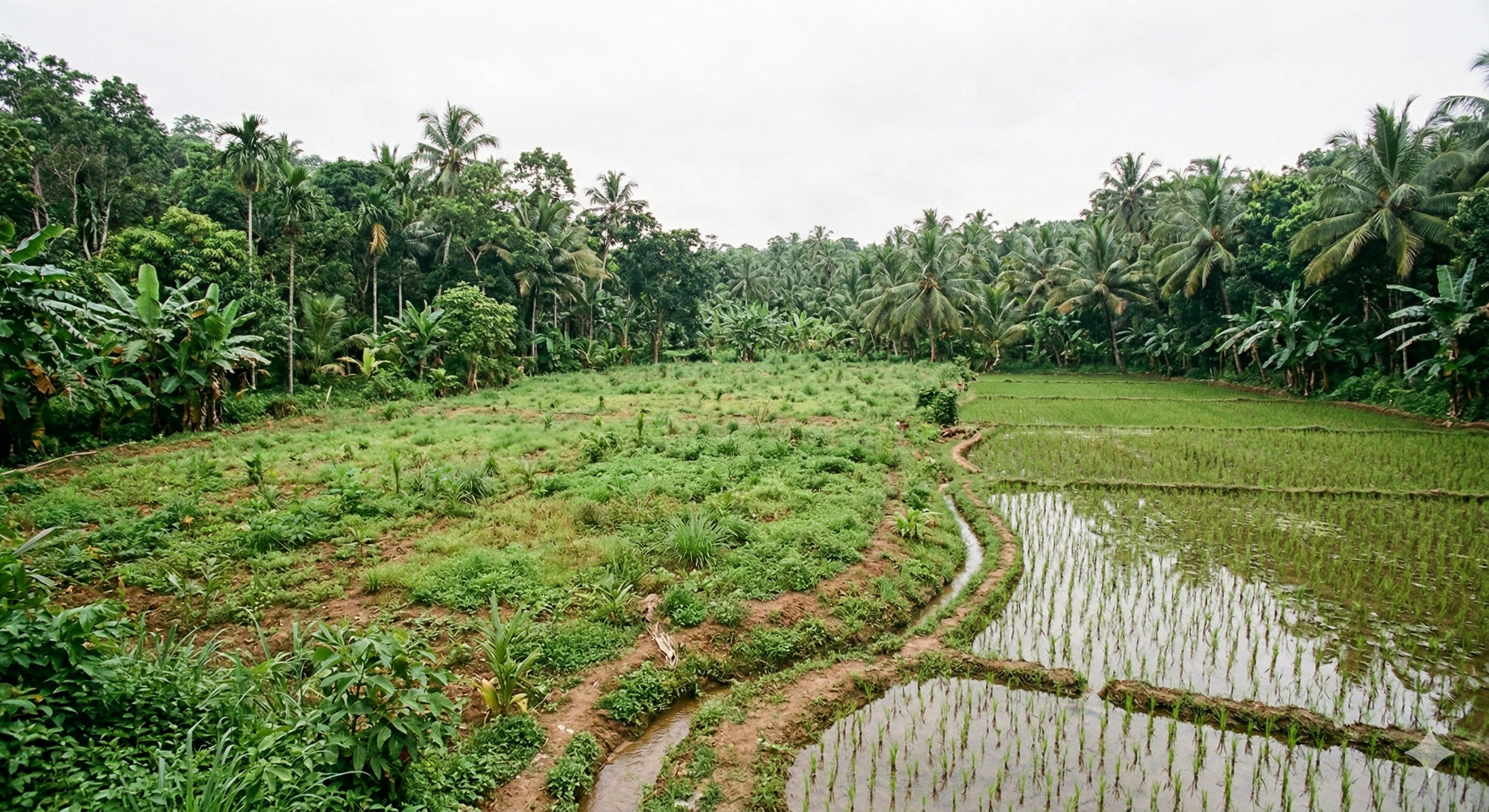
Once mining is complete, the law requires the pit to be backfilled. The land returns to agricultural use. Visit Ratnapura today and you will see active rice paddies next to recently backfilled mining sites. The environmental footprint, while not zero, is small compared to mechanized operations.
For a detailed look at the extraction process itself, from the initial dig through washing and sorting, see our guide to how Sri Lankan gems are mined.
What About Child Labor and Worker Safety?
Sri Lanka has some of the strongest child labor laws in the gem-producing world. The minimum working age is 14 for light work and 18 for hazardous work, which includes mining. The country ratified ILO Convention 182 (Worst Forms of Child Labour) in 2001 and ILO Convention 138 (Minimum Age) in 2003. The Department of Labour actively inspects mining operations.
This does not mean the system is flawless. Informal, unlicensed operations exist, particularly in remote areas. But the regulatory infrastructure is meaningfully stronger than what exists in Myanmar, Madagascar, or parts of East Africa where sapphires are also mined. When you buy a Ceylon sapphire from a documented supply chain, you are buying from a country that has made measurable commitments to labor standards and has the institutions to enforce them.
Worker safety in small-scale pits is managed through traditional knowledge passed between generations. Pit walls are reinforced with timber. Depths are kept shallow. The risks are real but understood and mitigated in ways that reflect centuries of practice. Industrial accidents of the kind associated with large-scale underground mining are extremely rare in Sri Lanka's alluvial gem sector.
What Is the Environmental Impact?
Every form of mining has environmental impact. The question is degree.
Sri Lanka's alluvial gem mining is among the least destructive forms of mineral extraction on earth. No chemicals are used in the process. No mercury, no cyanide, no acid leaching. The separation of gems from gravel is mechanical: water, gravity, and human hands.
Pits are shallow, typically 5 to 15 meters deep. They tap into existing gravel deposits in river valleys and flood plains. The material removed is replaced after mining concludes. Compared to the open-pit sapphire mines in Australia or the mechanized operations in Madagascar, Sri Lanka's environmental footprint per carat is remarkably small.
The water used in washing is returned to local waterways. There is sediment disturbance, but it is localized and temporary. The NGJA's licensing requirements include environmental conditions, and the backfilling mandate ensures that land is not permanently altered.
None of this means the impact is zero. It means that when a buyer asks about the environmental credentials of their stone, a conflict free sapphire from Sri Lanka's small-scale sector has a genuinely defensible answer.
How Does Crestonne Verify Ethical Sourcing?
We source exclusively from Sri Lanka. Every stone we list comes from the Ratnapura or Elahera districts, purchased through relationships we have built with licensed miners and established local dealers over years of repeated transactions.
When we started building Crestonne's supply chain, we spent time in Ratnapura visiting mining sites, meeting the teams who do the actual digging, and understanding how material moves from the pit to the cutting house to the dealer. We saw operations where the entire crew was from the same village, where the pit boss was the father and his sons worked alongside hired men. We also saw operations we chose not to buy from because the documentation was incomplete or the conditions did not meet our standards.
Our verification is not a checkbox exercise. It comes from knowing the people we buy from and having been to the places where the work happens. Every stone we sell has a GIA or equivalent laboratory report confirming Sri Lanka origin. This is not proof of ethics on its own, but it confirms the stone came from a country with the legal and regulatory infrastructure described above.
We do not claim to audit every step of every stone's journey. That would be dishonest. What we can say is that we know our sources, we have visited the mining districts, and we reject material that cannot be documented. Read more about our approach and the relationships behind it.
Which Ethical Certifications Actually Matter?
Here is the uncomfortable truth about fair trade gemstones: no widely recognized, independently audited "fair trade" certification exists for colored gemstones as of 2026. The Fairmined standard applies to gold. The Kimberley Process applies to diamonds. Neither covers sapphires, rubies, or any other colored stone.
Some organizations offer their own ethical sourcing labels. A few are meaningful. Most are marketing. Here is how to evaluate them:
Meaningful indicators:
- GIA, SSEF, or Gübelin geographic origin report confirming the stone is from a country with strong mining regulations
- Seller can name the specific mining district and describe the supply chain
- Seller has visited origin and can demonstrate an ongoing relationship with mining communities
- Seller discloses treatment history and provides laboratory documentation
Marketing signals with limited substance:
- "Ethically sourced" with no supporting detail
- References to the Kimberley Process (which does not apply to sapphires)
- Self-certified "ethical" labels from the seller's own brand
- Vague references to "community partnerships" without specifics
The absence of a formal certification system does not mean ethical sourcing is impossible. It means the responsibility falls on the seller to demonstrate their practices, and on the buyer to ask questions. If a seller cannot answer "where exactly was this stone mined, by whom, and how do you know?", their ethics claims deserve skepticism.
Explore the Crestonne collection to see how we document each stone, or submit a request through our custom sourcing service if you want a stone sourced to specific ethical standards.